When you purchase through links on our site, we may earn an affiliate commission. Learn more.

Home Backup:
Reviews, Roundups & Buying Guides

Our verdicts weigh independent lab and bench testing, long-term owner reports, and manufacturer specifications — cross-checked against real-world use, not repeated from the spec sheet. Every figure cited reflects that published evidence base. Learn more.

Best Solar Generator for Home Backup in 2026

Across this category, rated solar input and delivered solar input are routinely different numbers — sometimes by half. An important part of how we built this page was separating systems whose solar throughput is verified from those where the rating is the whole story. For some buyers, verified solar is the deciding factor; for others, storage depth or split-phase output matters more. No single system wins every situation.

What Home Backup Power Actually Is

The honest one-sentence version: it’s a big battery that takes over the moment the grid drops.What makes it interesting isn’t the definition, it’s the substitution. It does a standby generator’s job — keeping the house powered when the utility fails — minus the fuel, the fumes, and the noise, which is the whole reason it can sit in a basement or a closet and switch itself on in the middle of the night without anyone waking to start it.

The thing to absorb before shopping is the range. “Home backup” covers a plug-in box that keeps a fridge, the internet, and a CPAP alive through an evening outage and a wheeled unit wired into your breaker panel that runs the well pump and central AC for days. They share a name and almost nothing else — which means the spec that makes a unit perfect for one buyer is frequently the spec that rules it out for the next. Figure out which job is yours first, and the right class of equipment follows.

The battery

Lithium cells store the energy — measured in watt-hours, this is how long your essentials stay up after the grid goes down.

The inverter

Turns stored power into household AC — whether it’s 120V-only or true 240V split-phase is the line between essentials and whole-home.

The hookup

Plug essentials straight in, or wire the unit into your panel through a transfer switch to back up the whole house.

01 Scope

Essentials Backup

Plug-in backup for the circuits you can’t lose — no panel work.

Essentials backup keeps the few circuits you genuinely can’t lose running through an outage — refrigerator, internet, lights, a CPAP, a sump pump — without wiring anything into your electrical panel. You plug the loads straight into the unit, or run them through a small interlock. The trap isn’t whether a station can run your fridge; nearly any mid-size one can. It’s whether it runs everything on your list, together, for as long as the power is actually out — and the spec that tells them apart is delivered watt-hours against your real load, not the headline capacity. Every unit below links straight to its full review.

01
Reviews

Products

Every station we’ve reviewed that’s suited to plug-in essentials duty — the units that actually carry a fridge, a modem, and a CPAP through a multi-day outage, judged on delivered watt-hours against a real load rather than headline capacity. Each card links straight to its full review.

Anker SOLIX F2600 Review (2026)
Review

Anker SOLIX F2600 Review (2026)

Buy the F2600 if you want a quiet, fast-charging 2.5kWh station for RV shore power, weekend camping, or...

Buy If5 min read
Anker SOLIX C2000 Gen 2 Review (2026)
Review

Anker SOLIX C2000 Gen 2 Review (2026)

Buy it. For the home-backup, RV, and camping buyer who wants a 2kWh station that recharges fast, sips power...

Strong Buy6 min read
Review

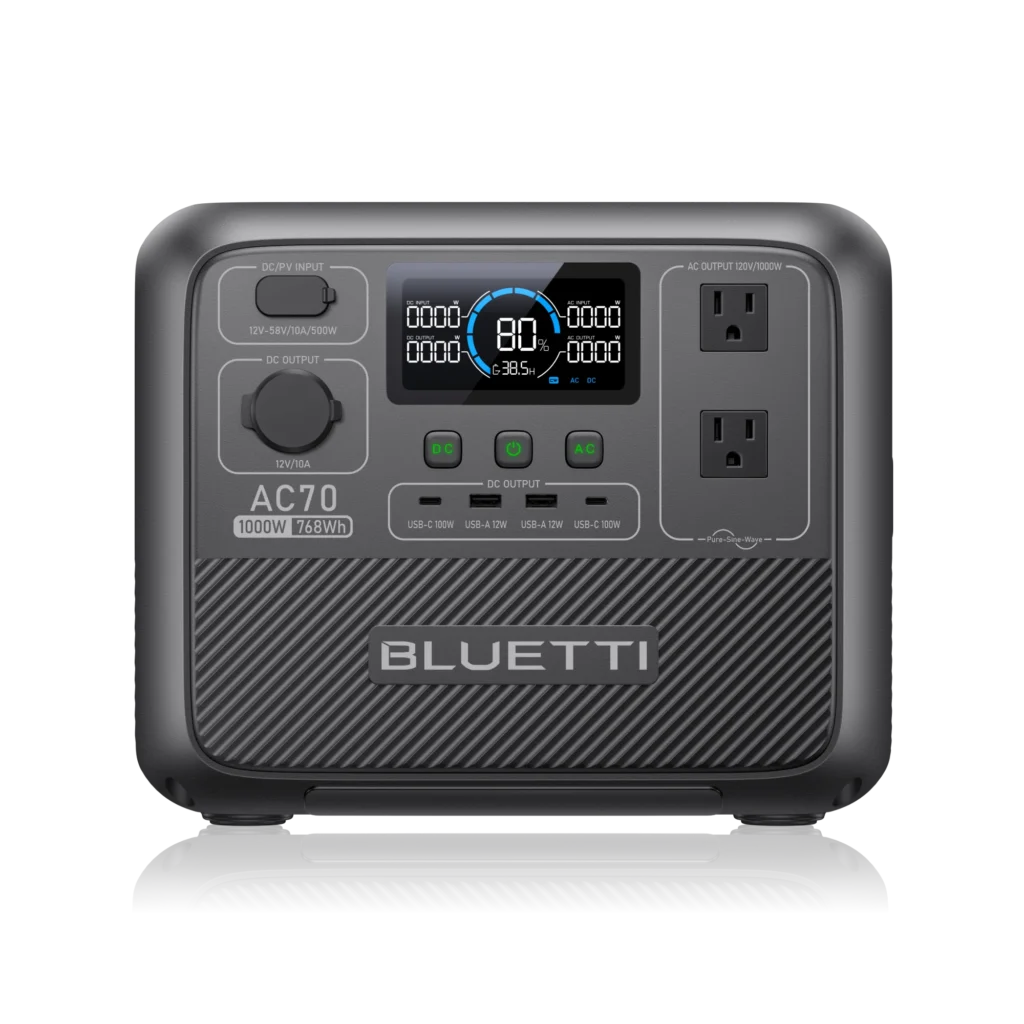
Bluetti AC70 Review (2026)

Buy the AC70 if you want a power station you can carry one-handed for camping, van life, RV trips, CPAP...

Buy If7 min read
Review

Jackery Explorer 1500 v2 Review (2026)

Buy the Explorer 1500 v2 if you want a portable 1.5kWh station for camping or essential-circuit home backup,...

Buy If4 min read
Review

EcoFlow DELTA 3 Classic Review (2026)

Buy it if you want a sealed, single-unit power station for fast charging and seamless UPS duty, and you have...

Buy If6 min read
Review

Jackery Explorer 2000 Plus Review (2026)

Buy the Explorer 2000 Plus if you're building a power system over time, not just buying a one-off battery....

Buy If6 min read
Review

Jackery Explorer 2000 v2 Review (2026)

Buy the Explorer 2000 v2 if you want a portable 2kWh station for camping, outage backup, and fast wall...

Buy If6 min read
Review

EcoFlow DELTA 2 Max Review 2026

Buy it if your primary use is home backup for essentials (fridge, lights, devices) during weather-related...

Buy If7 min read
Review

Anker SOLIX F3800 Review (2026)

Buy the F3800 if you want single-unit 120V/240V backup for outages measured in hours to a day or two, and you...

Buy If7 min read
Review

Jackery HomePower 3600 Plus Review 2026

Buy the HomePower 3600 Plus if your backup needs are 120V — running a fridge, lights, comms, and the...

Buy If5 min read
Anker SOLIX C1000 Gen 2 Review (2026)
Review

Anker SOLIX C1000 Gen 2 Review (2026)

Buy it if you want a compact, fast-recharging 1kWh power station for camping, vehicle use, short outages, or...

Buy If5 min read
Review

EcoFlow DELTA Pro 3 Review (2026)

Buy the DELTA Pro 3 if you want native 120V/240V split-phase from one portable unit and you'll wire it into...

Buy If8 min read
02 Scope

Whole-Home Backup

240V through your panel — split-phase systems and transfer switches.

Whole-home backup means powering 240V circuits — well pump, furnace, central AC, water heater, dryer — through your electrical panel, which puts you past the plug-in bracket entirely and into split-phase systems and transfer switches. The trap is the label: plenty of units marketed as “home backup” are 120V only. Before anything else, confirm the unit actually outputs split-phase 240V — that distinction decides whether it can run the loads you’re buying it for. This is the smaller, more demanding end of home backup today.

01
Reviews

Products

Every unit we’ve reviewed that genuinely outputs split-phase 240V — the systems that feed your panel, not the 120V stations dressed up as home backup. Each card links straight to its full review. Expect this grid to stay thin until more 240V reviews land.

Review

EcoFlow DELTA Pro Ultra Review 2026

Buy it if you want whole-home backup you install yourself and recharge primarily from the grid or a...

Buy If6 min read
Review

EcoFlow DELTA Pro 3 Review (2026)

Buy the DELTA Pro 3 if you want native 120V/240V split-phase from one portable unit and you'll wire it into...

Buy If8 min read
Review

Anker SOLIX F3800 Plus Review (2026)

Buy if you need a 120V/240V split-phase backup system that can charge simultaneously from a 240V generator or...

Buy If7 min read
Review

Anker SOLIX F3800 Review (2026)

Buy the F3800 if you want single-unit 120V/240V backup for outages measured in hours to a day or two, and you...

Buy If7 min read
Review

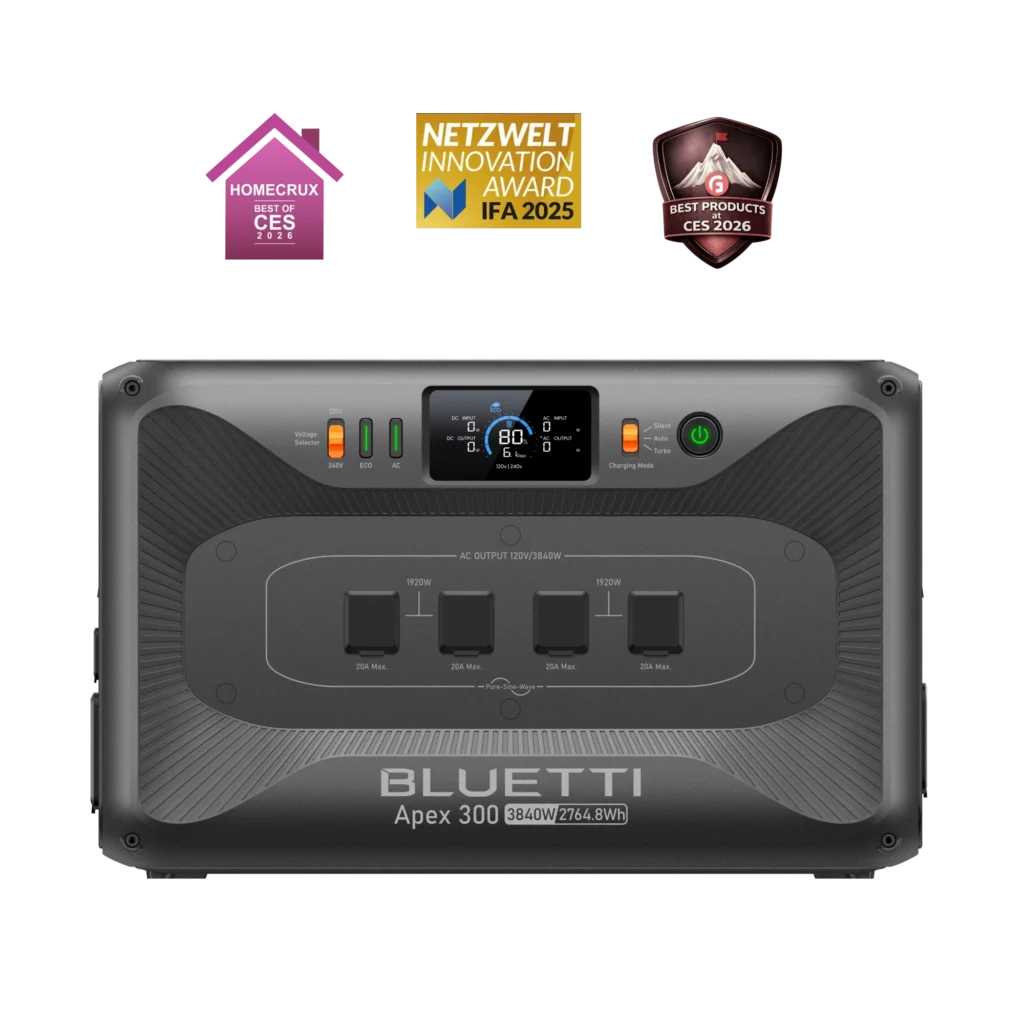
Bluetti Apex 300 Review (2026)

Buy the Apex 300 if you want a permanently-sited home, RV, or off-grid backup with true 120V/240V split-phase...

Buy If7 min read
Review

EcoFlow DELTA Pro Ultra X Review (2026)

Buy it if you want true whole-home backup in a single portable unit — and you go in clear-eyed about two...

Buy If6 min read
Review

Jackery Explorer 5000 Plus Review (2026)

Buy the Explorer 5000 Plus if you're building seamless, 240V home backup and you're committing to the Smart...

Buy If4 min read
Review

Anker SOLIX E10 Review 2026

Buy the E10 if you want a permanently installed, expandable whole-home backup system that combines battery,...

Buy If6 min read
Review

Anker SOLIX F3000 Review (2026)

Buy the F3000 if you want a high-output, portable 3kWh station for RV power, jobsite tools, and riding out...

Buy If6 min read
Review

EcoFlow DELTA 3 Max Plus Review 2026

Buy it if you want a compact, fast-charging 2kWh station for essential-appliance backup, RV/van DC...
Buy If6 min read
02
Compare

Roundups

Head-to-head roundups that rank whole-home systems against each other — the split-phase 240V comparisons that put transfer-switch-ready units side by side, so you can see how the panel-level options stack up before you commit.

The concepts that cut across both

The wiring and sizing that decide a home-backup buy

Four ideas belong to neither scope alone — the wiring and sizing concepts that decide which class of unit you actually need.

01

Voltage

120V vs 240V: the split that decides everything

The single question that sorts every home-backup purchase isn’t capacity — it’s whether the unit puts out 240V. Your fridge, lights, modem, and most outlets are 120V; your well pump, dryer, central AC, and electric range are 240V, fed by two 120V legs working together. A 120V-only station physically cannot run a 240V appliance, regardless of its wattage or battery size — the voltage is simply wrong for the load. This is why home backup splits into two scopes rather than one size ladder: an essentials buyer never needs 240V and shouldn’t pay for it, and a whole-home buyer who skips it finds the gap the first time the well pump won’t start.

02

Wiring

The transfer switch: where plug-in stops

Essentials backup can be as simple as a heavy extension cord to the unit. The moment you want a battery to feed your house wiring — the actual outlets and hardwired circuits — you need a transfer switch or interlock, and almost always an electrician. The transfer switch disconnects your house from the grid before your battery energizes the circuits, so power can’t backfeed onto the utility lines and injure a lineman. It isn’t optional and it isn’t DIY for most people — budget for the switch and the install, not just the battery.

03

Sizing

Runtime vs outage length: the math that sizes the unit

The mistake that sinks more home-backup purchases than any other is sizing for the appliance instead of the outage. “It runs my fridge” is the wrong test; “it runs my fridge for as long as the power is actually out” is the right one. Runtime is capacity divided by load, so a long evening asks a fraction of what a multi-day storm asks from the same appliances. Work it backward: list the loads, estimate the hours, and size to that product — then check it against the delivered watt-hours, which run below the nameplate.

04

Recharging

Recharging between outages — and where backup becomes off-grid

A backup battery is only as good as its ability to come back. For a short outage it doesn’t matter — you ride it out and recharge afterward. For anything multi-day the question flips: can it refill during the outage? That’s where backup borrows from off-grid thinking — solar or a generator input becomes the difference between a battery that empties on a clock and one that sustains, and a multi-day plan leans on expandable capacity. There’s also the always-on case: if you want the battery inline so sensitive gear never sees the grid drop, you’re in UPS territory, where switchover speed matters.