When you purchase through links on our site, we may earn an affiliate commission. Learn more.

Solar Panels:
Reviews, Roundups & Buying Guides

Our verdicts weigh independent lab and bench testing, long-term owner reports, and manufacturer specifications — cross-checked against real-world use, not repeated from the spec sheet. Every figure cited reflects that published evidence base. Learn more.

Best Portable Solar Panels in 2026

No single panel wins all three situations. The right panel is the one matched to what you actually do with it — how far you carry it, how often you move it, and how much power you genuinely need. This page is built around that split: three buyer situations, each with its own pick and the honest case for why it wins that situation and not the others.

What a Solar Panel Actually Is

The honest one-sentence version: it’s a slab of photovoltaic cells that turns daylight into DC power for your battery.What makes it interesting isn’t the definition, it’s the dependency. A power station is bought on its own terms; a panel almost never is — it’s bought to feed a specific station, which means a brilliant panel is worthless to you if its plug and voltage don’t match what your unit will accept. And the watt rating on the front is a lab-condition ceiling, not a promise — the gap between that number and what actually lands in the battery is where most of the disappointment lives.

The thing to absorb before shopping is the range. “Solar panel” covers a folding briefcase you set on the ground and angle at the sun and a rigid glass-and-aluminum slab bolted to an RV roof for years. They share a name and almost nothing else — which means the panel that’s perfect for parked, mounted power is frequently the wrong call for portable, and the reverse. Sort out parked-or-portable first, and the right kind of panel follows.

The cells

Photovoltaic cells turn daylight into DC electricity — measured in watts, the rating you see is taken under perfect lab conditions.

The real output

Heat, haze, a less-than-ideal angle, and cable loss all take a cut — delivered watts run below the sticker, on almost every panel.

The connection

A plug — MC4, XT60, a barrel jack — and a voltage that has to land inside your station’s charging window, or nothing charges at all.

Shop by

Form Factor & Fit

Foldable or fixed comes first — then use case and brand.

01
Form factor · Portable

Portable & Foldable Panels

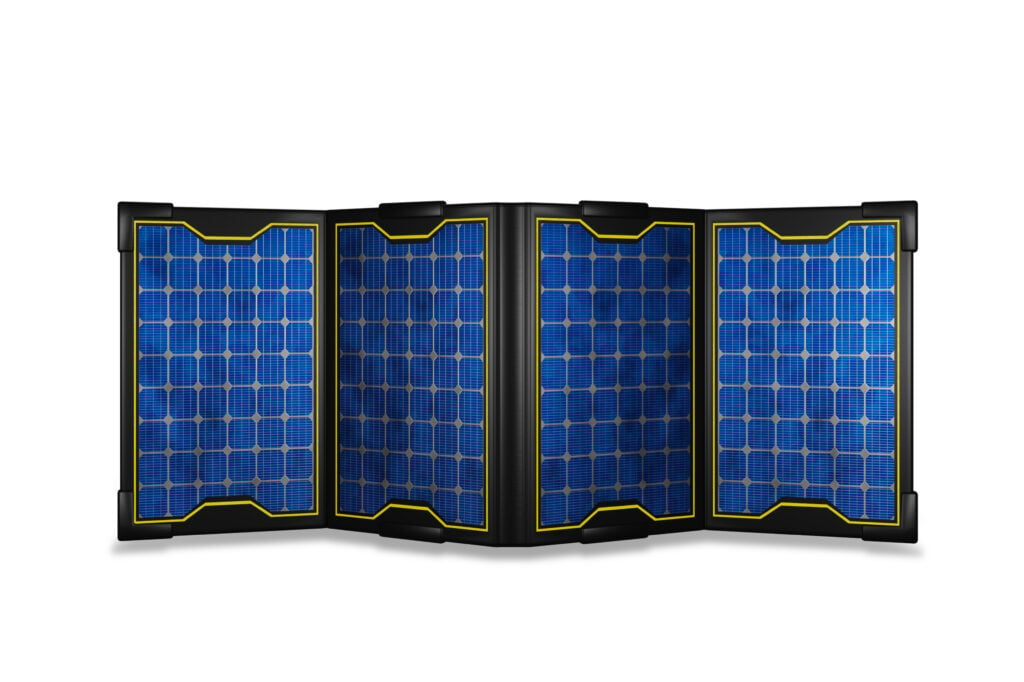
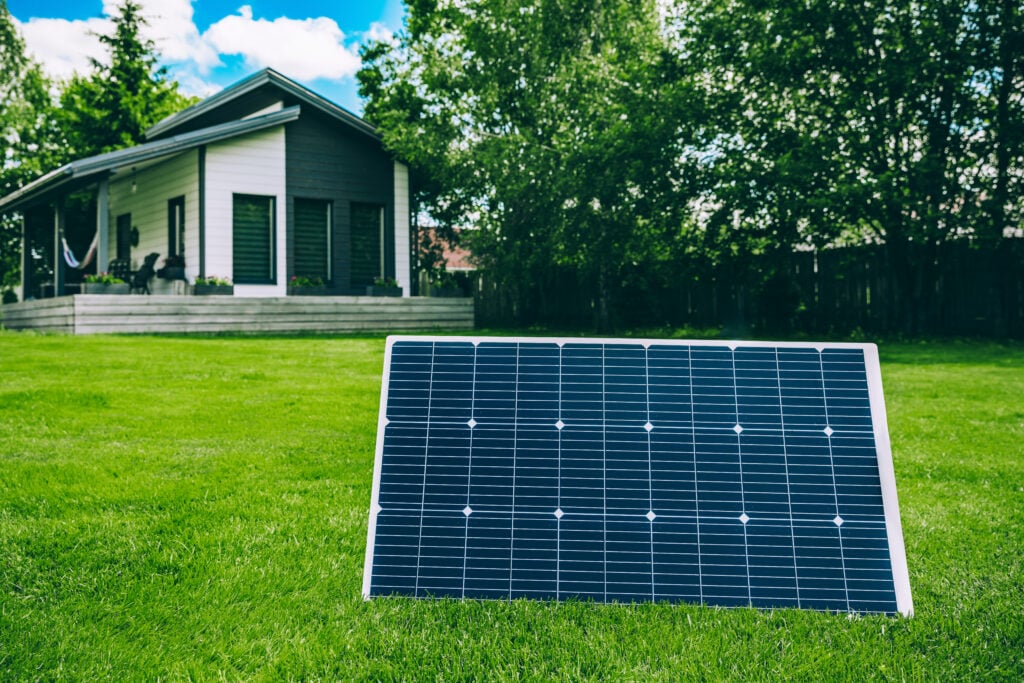
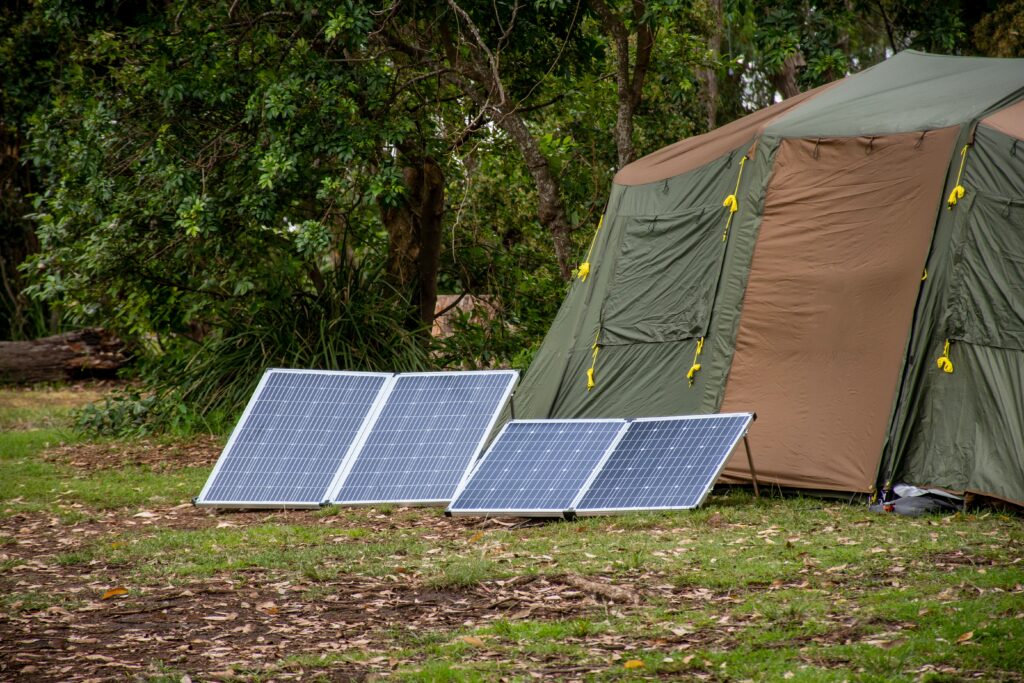
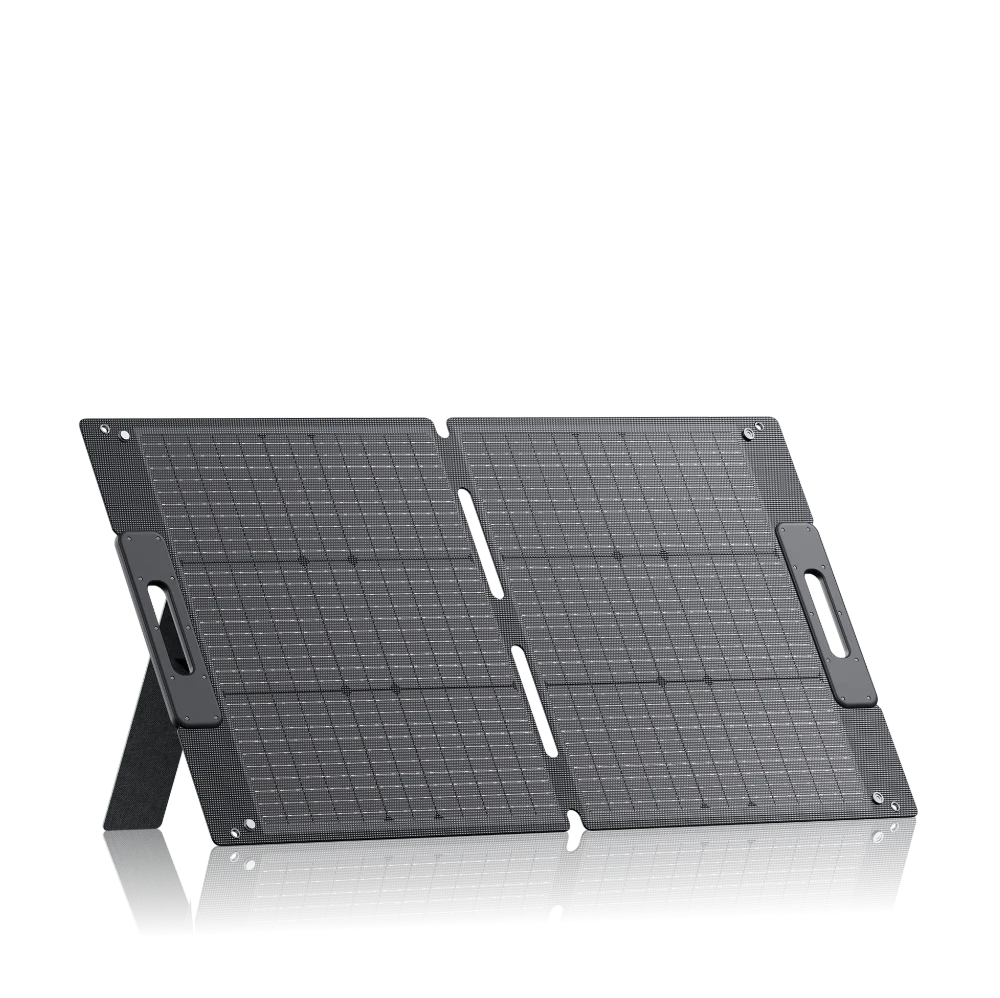
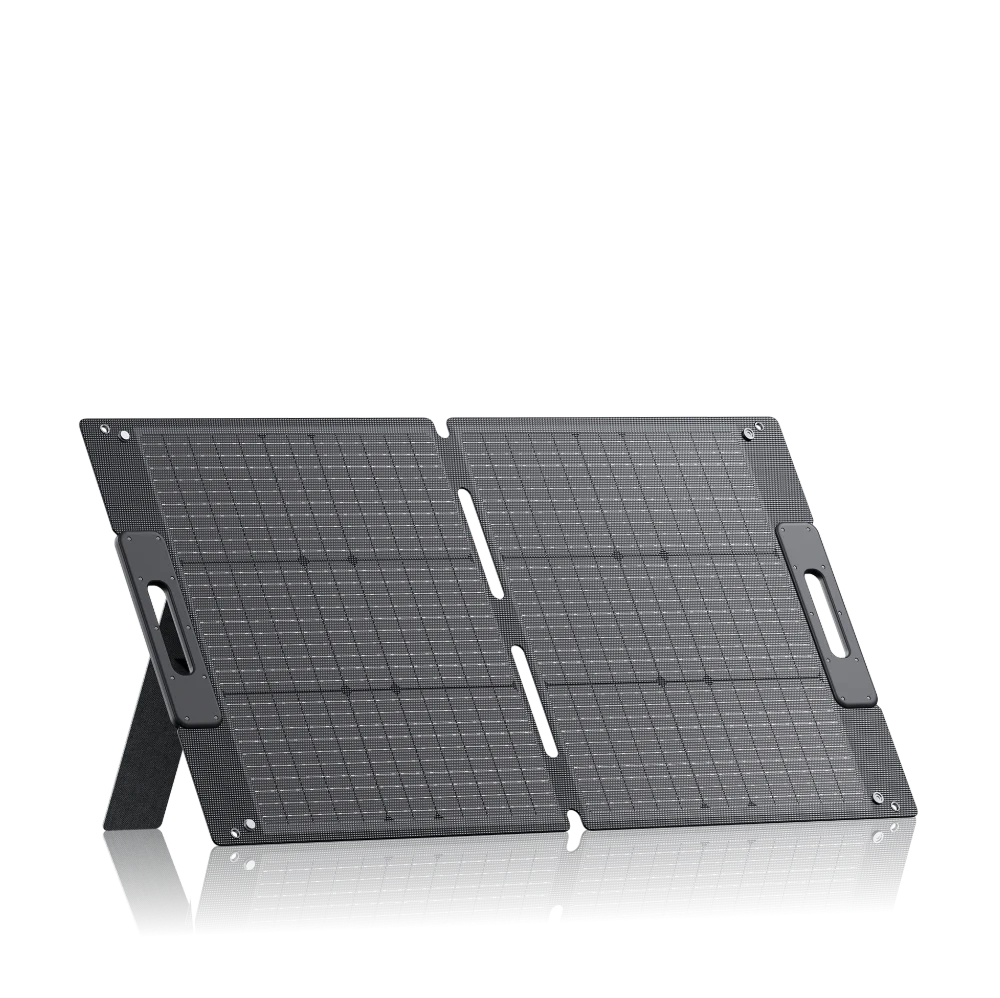
Portable panels are the foldable, briefcase-style or roll-out units you set on the ground, angle at the sun, and pack away when you’re done — the default pairing for a power station that moves with you. The trap here isn’t the panel, it’s the optimism: a foldable panel’s rated wattage is measured under lab conditions you will essentially never see, so a panel sold as 200W commonly delivers well under that into a real station on a real afternoon. The second catch is the connection — a foldable panel is only useful if its plug and voltage land inside your station’s charging window, and “it has a solar input” doesn’t guarantee a match. Buy by realistic delivered watts and confirmed compatibility, not by the number on the bag.

Review

Bluetti SP200L Review (2026)

Buy the SP200L if you already own a Bluetti station, want a foldable panel for camping, RV trips, or...

Buy If5 min read
Review

Jackery SolarSaga 200W Solar Panel Review

Buy it if you already run Jackery power stations and want a single panel that hits its rating in good sun...

Buy If5 min read
Review

Jackery SolarSaga 500X Review (2026)

Buy the SolarSaga 500X only if you already own a Jackery station and will commit to mounting it on a fence,...

Skip Unless4 min read
Review

Jackery SolarSaga 40W Review (2026)

Buy this only if you already own a current-generation Jackery power station — the Explorer 100 Plus, 240...

Skip Unless5 min read
Review

Anker SOLIX PS200 Review (2026)

Buy the PS200 if you already own — or are buying — an Anker SOLIX power station and you want a portable...

Buy If6 min read
Review

Anker SOLIX PS100 Review (2026)

Buy the PS100 if you own an Anker SOLIX C300, C300 DC, or a similarly sized C-series station and want a...

Buy If6 min read
Review

EcoFlow NextGen 220W Bifacial Solar Panel Review

Buy it if you own an EcoFlow DELTA-series station, set the panel up carefully, and leave it stationary or...

Buy If5 min read
Review

Anker SOLIX PS400 Review 2026

Buy the PS400 if you're feeding an Anker power station from a fixed or semi-permanent spot — a campsite you...

Buy If5 min read
Review

Jackery SolarSaga 100W Review 2026

Buy it if you own a Jackery Explorer 240 through 500 (or another small portable station) and want a...
Buy If4 min read
Review

EcoFlow 45W Portable Solar Panel Review (2026)

Buy it if you own a RIVER-series station and want a pocketable panel to keep phones, laptops, and a small...

Buy If5 min read
Review

EcoFlow 110W Portable Solar Panel Review

Buy this if you own an EcoFlow RIVER-class power station and want a genuinely light, weatherproof panel for...
Buy If5 min read
Review

Bluetti SP100L Review (2026)

One independent side-by-side bench test puts the SP100L squarely mid-pack among 100W folding panels in real...

Watching5 min read
02
Form factor · Fixed

Fixed-Mount Panels

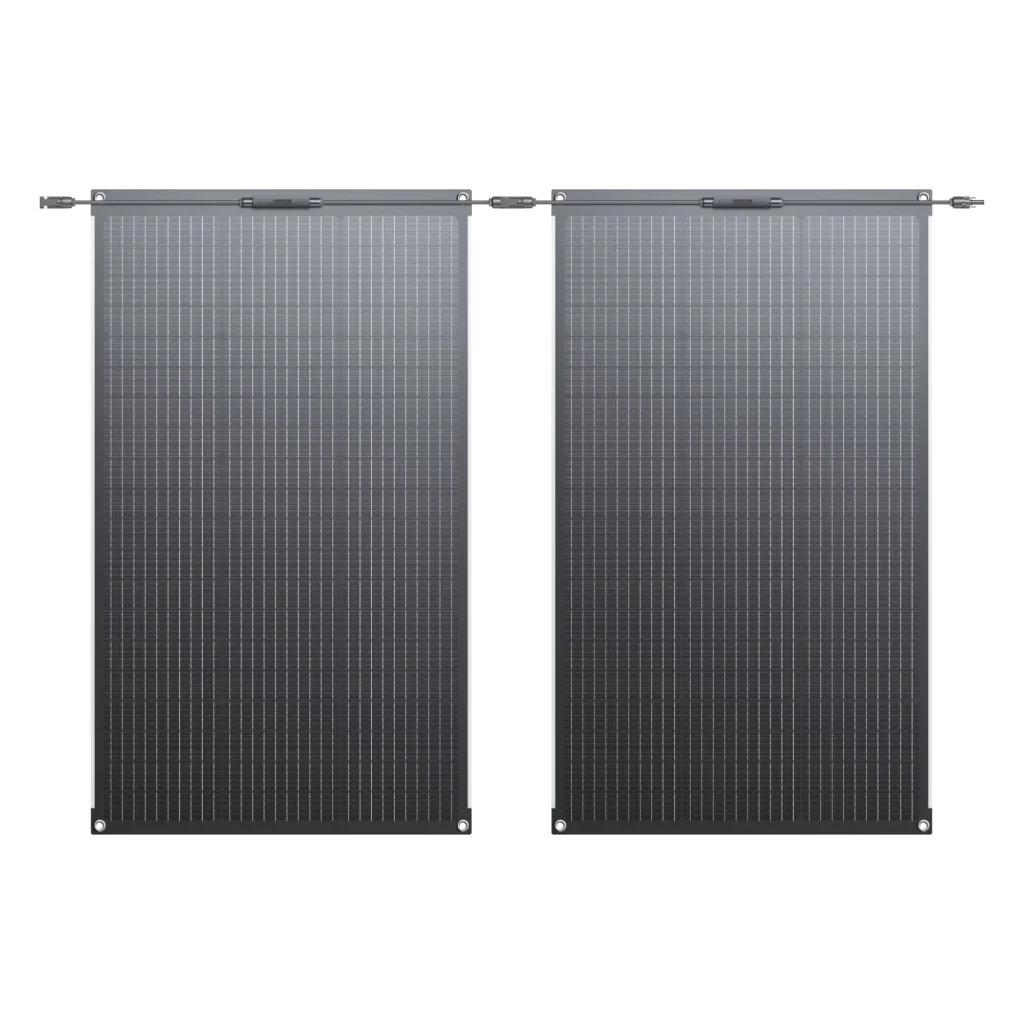
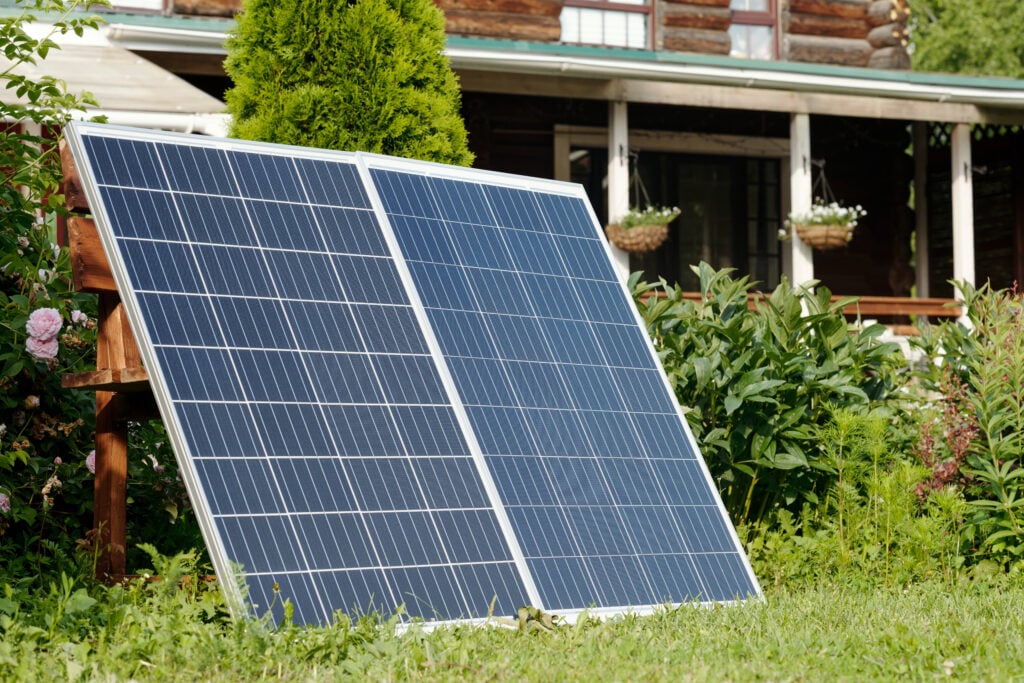
Fixed-mount panels — rigid glass-and-aluminum and the semi-flexible laminates that bond to a curved roof — are built to be installed once and left there: RV roofs, van shells, sheds, cabins, off-grid arrays. You trade the portable panel’s chase-the-sun flexibility for higher sustained output and a permanent place in the system, which is why this end of the catalog is about how many panels you need and how they wire together, not about folding and stowing. The trap shifts accordingly: with a mounted array, series-vs-parallel wiring changes the voltage and current your charge controller sees, and getting it wrong either wastes output or exceeds the input window. This is the smaller, more install-oriented end of the panel range today, and it grows as more mounted and bifacial units are reviewed.

03
By use case

Use-Case Roundups

Panels grouped by the job they’re bought for — topping a power station at camp, feeding an RV roof, building out an off-grid array — so the output and durability tradeoffs are already weighted for how you’ll actually use it. Start here when you know the use before you know the panel.

Learn

Exploring

The guides that turn rated watts and connectors into a confident buy.

The educational layer behind the picks — how to read a panel’s rated watts against what it really delivers, confirm a connector and voltage match before you buy, size a panel to your station and your sun, and wire more than one without exceeding the input window. Start here if the spec sheets still feel optimistic.

How Solar Charging a Power Station Works
Guide

How Solar Charging a Power Station Works

Here's the part nobody warns you about: you can wire up perfectly good solar panels to a perfectly good power...

7 min read
How to Recharge a Power Station Off-Grid
Guide

How to Recharge a Power Station Off-Grid

The number printed next to "Max Solar Input" on the box is not a promise — it's a ceiling measured at noon,...

9 min read
Can You Run a Power Station Off-Grid Without Sun
Guide

Can You Run a Power Station Off-Grid Without Sun

Here's the real answer to "can I run a power station off-grid without sun" — and it's not the one most...

8 min read
How to Charge a Power Station While Driving
Guide

How to Charge a Power Station While Driving

Everyone's first instinct is to reach for the cigarette-lighter socket. It's right there, it fits the cable...

7 min read
How to Charge a Power Station While Camping
Guide

How to Charge a Power Station While Camping

The cigarette lighter socket in your car feels like the obvious answer — you're driving anyway, might as...

10 min read
Power Station Recharge Time, AC and Solar
Guide

Power Station Recharge Time, AC and Solar

The spec sheet says "recharges in 2 hours." The fine print — if it exists at all — says that figure...

8 min read
Power Station Generator Input: Dual-Fuel Charging
Guide

Power Station Generator Input: Dual-Fuel Charging

The spec sheet says your power station accepts up to 1800W from a generator. That number is real — but it's...

9 min read
Power Station Ports & Pass-Through Charging
Guide

Power Station Ports & Pass-Through Charging

Pass-through charging gets marketed as a free bonus — plug the station into the wall and power your gear at...
6 min read
Power Station DC Charging From Your Car or RV
Guide

Power Station DC Charging From Your Car or RV

Most people discover the problem the same way: they plug their power station into the cigarette lighter, go...
7 min read
How Long Does a Power Station Take to Charge
Guide

How Long Does a Power Station Take to Charge

The charge time on the box is almost always wrong — and not by a little. For solar charging especially,...

7 min read
How Long Does It Take to Charge a Power Station With Solar
Guide

How Long Does It Take to Charge a Power Station With Solar

The number on your solar panel's label is a lab ceiling — one that real sun almost never reaches. Expect to...

8 min read
The concepts that cut across both

The output and fit that decide a solar-panel buy

Four ideas belong to neither form factor alone — the buying concepts that decide whether any panel is right for you.

01

Output

Rated Watts vs. Real-World Output

The single most misleading number in solar is the wattage printed on the panel. That figure is measured under Standard Test Conditions — a specific lab temperature, a specific light intensity, the panel aimed perfectly — and real-world output runs meaningfully below it on almost every panel, in almost every setup. Heat, haze, a less-than-perfect angle, cable losses, and your station’s own charge ceiling all take a cut between the rating and the watt-hours that actually land in the battery. This is why two “200W” panels can perform very differently, and why we judge panels on delivered output rather than the sticker. Read the rating as a ceiling you’ll never quite reach, not a promise.

02

Compatibility

Will It Even Connect? Plugs, Voltage, and Your Station’s Window

A panel can be excellent and still be useless to you if it doesn’t physically and electrically match your station. Two things have to line up: the — MC4, XT60, proprietary barrel plugs, and the adapters between them — and the voltage and current the panel produces versus the window your station’s MPPT controller accepts. Feed a station voltage below its minimum and it won’t charge; exceed its maximum and it ignores the input or faults. “Has a solar input” is not the same as “works with this panel,” and the mismatch is invisible until the battery isn’t filling. Confirm the pairing before you buy, especially when the panel and station are different brands.

03

Sizing

Sizing Panels to Your Station (and Your Sun)

How much panel you need is a function of three things: how big your battery is, how fast you want it refilled, and how many usable sun hours your location actually gets. A small foldable panel can keep a 300Wh station topped up indefinitely but will crawl against a 2000Wh one; the right pairing depends on whether you’re trickle-maintaining or trying to fully recharge between uses. Work from the station’s capacity and your real sun, not from a panel’s headline watts — the math that turns a battery size into a panel target is the same whether you’re sizing for a weekend or for full-time off-grid living.

04

Construction

Mono, Poly, Bifacial — and How They Wire Together

Panel construction affects how much you get per square foot and per dollar. Monocrystalline, polycrystalline, and bifacial cells differ in efficiency and in how they behave in imperfect light, which matters most when space or weight is tight. Once you’re running more than one panel, how you wire them — in series or in parallel — sets the voltage and current your charge controller sees, and that has to stay inside the station’s input window just like a single panel does. For most portable users one panel is the whole story; for mounted arrays, cell type and wiring topology become the levers that decide whether the system performs.