
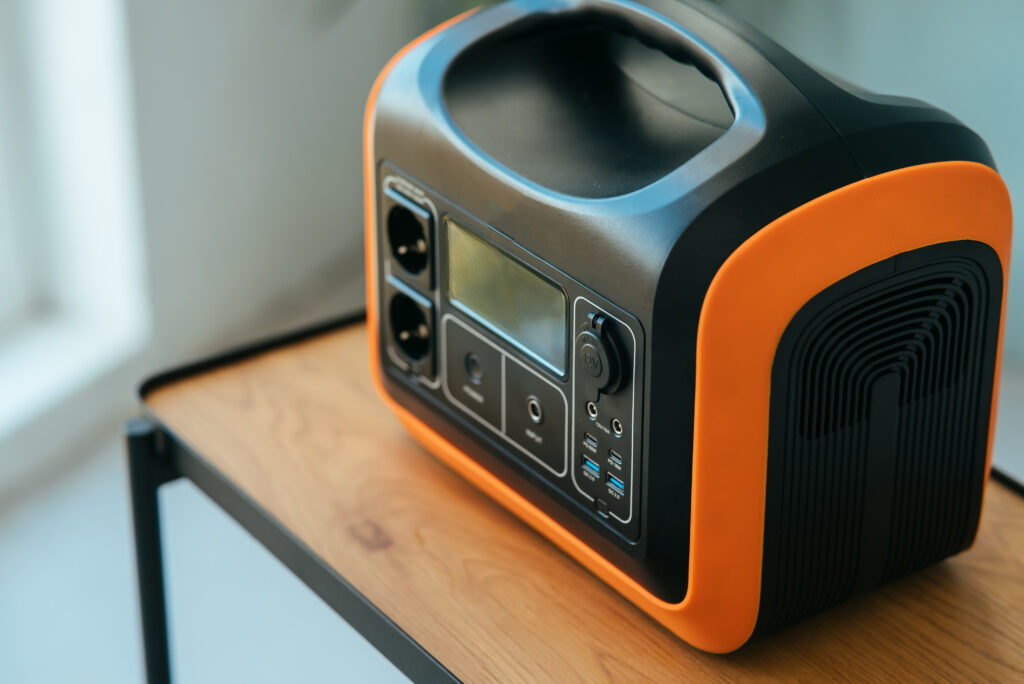

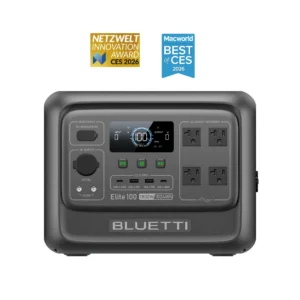
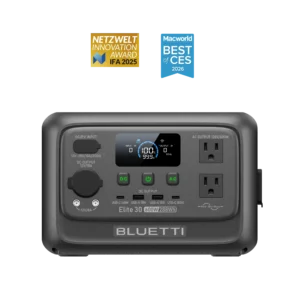
For the outage-prep buyer, the question is simple and unforgiving: can this battery run a cycling fridge, keep the router alive, and recharge fast enough from a generator to actually be useful across a multi-day event — without requiring you to babysit it? Weight barely matters. That question is the segment.
The spec sheet in this tier is nearly useless — five LiFePO4 units land between 2,042 and 2,074 Wh at $749–$849, and on paper any of them could run a fridge for a day. What separates the C2000 Gen 2 is its behavior when no one is watching. It idles at just 9 watts with AC output off, rising to about 18 watts with AC active — the lowest overhead in this class, confirmed across independent tests, and the number that quietly determines how many real fridge-hours you get from 2 kWh. The practical translation: real full-size-fridge runtime runs 14–22 hours, not the 32-hour figure on the marketing page. Size your outage math to the lower end.
Recharge is the other decisive leg. Independent testing measured 80–90 minutes to full on AC alone at 1,800 W, and 58 minutes combined AC and solar — which converts a generator from an all-day chore into a quick top-up. The 10 ms UPS switchover has been confirmed in owner accounts on computers, routers, and CPAPs without a single reboot; one owner logged a 21% draw per 6-hour CPAP night and counted the charge remaining accordingly.
Two setup steps are required before leaving it unattended, and the Review treats them as exactly that — setup, not flaws. Enable the Output Port Memory Switch so outputs come back on after a power event, and dial AC input below roughly 1,500 W if the unit shares a household circuit. Both take five minutes in the app; skip them and the unit behaves like a big battery, not a backup appliance.
The C2000 Gen 2 is also the only unit in this near-tie that is both expandable (a second 2,048 Wh battery pack brings it to 4,096 Wh) and under 42 lbs — lighter than every peer here by a meaningful margin.
Skip it if: you want the most raw fridge-hours per charge and will never need to expand — the runner-up delivers more measured capacity per cycle at a nearly identical price.
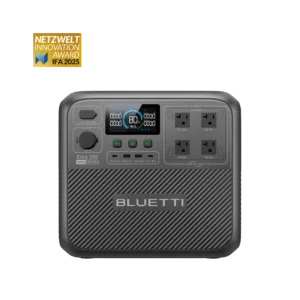
Independent bench testing measured 96% AC inverter efficiency and a near-9–10 W idle, producing the best measured fridge-hours-per-charge in this class — 22–30 hours of full-size-fridge runtime against the C2000’s 14–22. The 2,600 W inverter is the highest sustained output under $1,000, and the 15 ms UPS has bridged repeated grid drops for home servers without a reboot. Take it over the C2000 Gen 2 if peak fridge runtime per charge is the whole decision and you will never need to expand the pack.
Three things cost it the top spot: at 53.4 lbs it has no wheels and no easy solo carry; there is no expansion path; and the default ECO mode has a documented pattern of cutting power to low-draw cycling loads — a sump-pump owner discovered this the hard way. Disable ECO mode before any unattended use.
At a measured 39.5 lbs it is the lightest 2 kWh option in this class, and Emergency Super Charge reaches full in about 1 hour 42 minutes. It delivers roughly 1,710–1,740 Wh at appliance-class loads. The reason it does not place higher is a documented pattern of the UPS auto-switchover failing to engage — one owner describes it as a known issue — which is a direct veto for the hands-off continuity this segment requires. Its own review frames it correctly: a capable portable 2 kWh workhorse, not a set-and-forget backup.
Two other units worth a mention: the EcoFlow DELTA 3 Max offers the best value per watt-hour in this tier at $0.37 and a confirmed 10 ms UPS at $749, but its capacity is fixed and its 500 W solar ceiling limits future flexibility — behind both picks for a buyer specifically maxing the budget on backup. The EcoFlow DELTA 2 Max at $849 carries dual-MPPT solar, but its review documents firmware updates silently resetting AC output and random dropouts under continuous-output mode — a direct veto for any critical-load application.
The first power station has one hard requirement: it has to do everything reasonably well without asking you to pick a specialty. Car camping on weekends, a fridge and router during an attended outage, fast enough to top up between events, light enough to carry one-handed. No single axis decides this.
The feature that changes how a station gets used is recharge speed — and independent testing measured a full AC recharge in 46–47 minutes, slightly faster than Anker’s own 49-minute claim. That means a flat-to-full cycle fits between the campfire dinner and turning in for the night, which is a different kind of appliance than one that needs several hours. At 24.9 lbs it carries one-handed; below 200 W it runs under 20 dB, quiet enough to sleep next to.
The 2,000 W inverter handles the loads a first-station buyer actually runs — 1,500–1,700 W resistive loads including space heaters, air fryers, and hair dryers have been confirmed across owner accounts. The 10 ms UPS switchover is bench-verified and owner-confirmed across desktops, NAS boxes, and routers, with no reboots reported. Independent testing measured 850–907 Wh delivered at a 1,000 W AC load, roughly 83–89% of nameplate — a realistic planning number for mid-to-high mixed draws.
One limitation travels with this pick: SurgePad cannot be disabled, and high-inrush motor loads — table saws, some microwaves — can stall on startup. Test any motor-driven device before depending on it.
Skip it if: the $50 price gap over the runner-up matters and you don’t need the 12V car port or the faster recharge — the DELTA 3 Classic delivers more measured usable capacity per cycle at a lower price.
The DELTA 3 Classic has the best measured usable-capacity ratio on this page — bench testing found roughly 940 Wh delivered at the AC outlets, 91.7% of its 1,024 Wh nameplate, with the inverter holding 1,800 W from full to empty. Multiple tests confirmed 45 minutes to 80% and about 55 minutes to full. It idles at 13 watts and shares the C1000‘s confirmed 10 ms UPS, all at $449 — $50 less than the pick.
It stays runner-up for three concrete reasons: it is 2.4 lbs heavier, it carries no 12V car port (a real gap for 12V coolers and tire inflators), and its default 2-hour inactivity auto-shutoff has silently cut power to cycling loads — change it to ‘never’ in the app before any unattended use.
At 23.8 lbs it is the lightest 1 kWh box here, and it charges in under 90 minutes. It earns only a mention because the evidence against it on the axes this segment weighs stacks up: Jackery support’s own conversion-loss math puts delivered AC energy near 900 Wh, bench shutoffs occurred around 2,200 W with owner trips at 1,400–1,550 W against a 3,000 W surge spec, and a documented pattern of silent output drops makes it attended-use only.
The cheapest unit in this class at $399 and $0.39/Wh, with bench-confirmed 85–89% usable capacity. It earns only an honorable mention here because it cannot start reactive motor loads — a 1,275 W window AC that ran on the DELTA 3 Classic failed on this unit — and an early-failure cluster and default ECO-mode shutoff trap require active management. If you recharge from panels rather than walls, though, its 1,000 W solar ceiling makes it the pick in the next segment.
Off the grid, the station you can’t refill is dead weight by day two. Every station in this guide accepts solar input, so the checkbox means nothing — what decides this segment is real, tested solar throughput: how many watts actually flow in from a real panel string in real conditions.
A 1,000 W solar ceiling on a 1,024 Wh tank is roughly a 1:1 input-to-capacity ratio — nothing else on this page comes close. Bench testing confirmed the full 1,000 W is real at 48 V and 60 V panel configurations, not a marketing ceiling that shrinks under field conditions. In flat-mount real-world use, peak runs around 800 W, which still means a roughly 75-minute refill window in good sun — the fastest solar turnaround under $1,000.
Two setup details determine whether you see those numbers. High-current PV mode is off by default; toggling it took one owner from 123 W to 260 W of actual input. And panel voltage is the other lever: 24 V wiring pulled only 460 W, 12 V only 230 W. Plan for 48–60 V strings to get close to the ceiling. The XT60 input connector is non-proprietary, so any third-party panel within the voltage window works — a meaningful contrast with connectors that steer you toward a single brand’s panels.
Owners run diesel heaters, Starlink terminals, and 12V fridges off this unit across multi-day van trips. Independent bench testing measured 869 Wh over DC and 880 Wh at the wall — about 85–89% of nameplate at mixed loads — and 25 lbs with a hidden handle is genuinely portable at this capacity.
Three standing cautions from the review: it will not start window-AC or compressor loads even with Power Lifting mode enabled, ECO mode must be disabled before any unattended low-draw use (it will cut power to small cycling loads), and an early-failure cluster — all warranty-honored — argues for testing the unit hard inside the return window.
Skip it if: your budget is tighter and your loads stay under 1,000 W — the Bluetti AC70 at $349 covers the same off-grid role on a smaller tank with a standard connector.
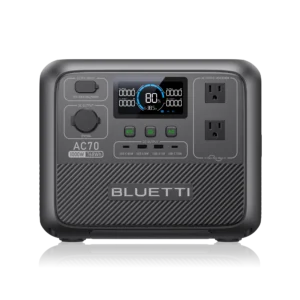
A 500 W solar ceiling on a 768 Wh tank is the second-best solar-to-capacity ratio here, on the same standard XT60 connector. Independent testing found roughly 185–195 W of real input from a single 200 W panel — a roughly 4-hour fill with one panel, about 2 hours with two. At mixed daytime loads with the DC port handling the cooler, usable energy runs 650–700 Wh; the lower 450–500 Wh figure in the review belongs to a low-load AC scenario where the fixed inverter idle takes a large share of every watt, and that condition doesn’t describe this buyer’s actual use.
Two things to know before you buy: the voltage operating window is 12–58 V VOC, which works with most portable panels but is worth confirming against your specific setup; and AC charging draws 400–500 W minimum in standard mode, which can trip a small vehicle inverter if you’re topping up from a car outlet on the road.
Carrying the station to a campsite by hand changes the math entirely. Two nights of lights, phones, a fan, and a 12V cooler running on the DC port — that’s the load. The question is whether the station makes it to Sunday with power to spare, and whether you notice the weight on the walk from the car.
The 600 Plus weighs 16 lbs 2 oz with its collapsible handle — the lightest station on this page that still carries weekend-scale capacity, and weight is the axis this buyer weights hardest. The runtime evidence is direct, not inferred: owners running phones, fans, and air pumps across two- and three-day trips ended at 80% and 25% remaining respectively. A 12V cooler on the DC port bypasses inverter idle entirely, which is the right way to run it — at this segment’s actual load, usable energy runs roughly 540–570 Wh, about 85–90% of the 632 Wh nameplate. Wall recharge takes about 1.5 hours with no external brick, confirmed across owner accounts against the 1.6-hour rated figure. The 12V DC adapter runs a CPAP for at least two nights per charge.
There are three real limits to know before packing it. The 800 W ceiling is a wall — no kettles or coffee makers on this trip. Outputs left on at idle carry a measured 23% standby loss over 12 hours (single-source, but the mechanism is straightforward inverter overhead); switch outputs off when nothing is plugged in. And if you have older Jackery cables with the DC7909 connector, you’ll need an adapter for the new DC8020 input port. The fan can ramp audibly under thermal load mid-night — one light sleeper was woken by it; DC operation runs cooler and quieter.
Skip it if: you can carry an extra 6.4 lbs and want headroom for a 1,000 W-class device at camp — the AC70 carries more usable energy at this load for $80 less.
At this load profile — DC cooler sidestepping inverter idle, aggregate draw high enough that idle is proportionally small — the AC70 delivers roughly 650–700 Wh of usable energy against the 600 Plus’s 540–570 Wh, and its 1,000 W ceiling clears loads the Jackery can’t touch. It costs $80 less and comes in at $0.45/Wh. The segment turns on a single thing: at 22.5 lbs versus 16.1, it is 6.4 lbs heavier. Take it over the pick if that gap is acceptable and you want the larger tank and broader output headroom. Voltage window and AC charge-draw notes from the solar segment apply here too.
Two units were considered and set aside. The EcoFlow RIVER 2 Pro carries a similar weight and a larger tank on paper, but its own review effectively says skip it unless you plan to cycle it constantly: a measured roughly 40% self-discharge over 24 hours with the inverter on, an erratic fan, and unreliable X-Boost behavior make both finalists clearly better for this trip. The Bluetti AC50B is honest at about 400 Wh usable, but at the same carry weight as the 600 Plus it offers 40% less capacity for $30 less — a straightforward loss on every axis this buyer cares about.
Under ten pounds means you carry it without noticing. The buyer here charges phones, tablets, and a laptop — maybe runs a router or CPAP on it as a lithium UPS. Output headroom is nearly irrelevant; what matters is whether the claimed capacity is real, whether the UPS actually switches over, and whether it survives sitting on a shelf without draining itself.
Everything that decides this segment is bench-verified for the Elite 30 V2. Independent testing measured 260 Wh usable at the AC outlets and 274 Wh over DC — roughly 90–95% of the 288 Wh nameplate under a real load. Full wall charge measured 51–70 minutes, with 80% in 40–45 minutes. The UPS switchover was confirmed on an oscilloscope at under 10 ms. In a class where the top two units look nearly identical on a spec sheet, the runner-up’s performance figures trace to Jackery’s published claims rather than independent bench testing — and where specs tie, the measured evidence takes the segment.
The 12V DC port runs a CPAP for 30 or more hours, which is the clearest illustration on this page of what happens at low loads when you skip the AC inverter: the same CPAP on the AC path with a humidifier runs only about 3.5 hours, because the fixed 11–19 W AC idle draw — measured with nothing connected — consumes a large share of the tank before the device sees a watt. Run DC for anything under roughly 100 W. The dual USB-C ports output 140 W and 100 W simultaneously, enough to fast-charge a MacBook Pro and a second device at the same time — unusual at this size.
One management rule matters: eco mode eliminates the idle drain, but it can shut off under very small loads like a bare router. Pick the mode to match the job — eco mode for storage and light use, eco off when the load is consistent enough to stay live. Hard limit: it will not charge below 32°F, which rules out winter shed or cold-car storage.
Skip it if: the last 1.3 lbs is the whole decision — the Jackery Explorer 300 v2 at 8.16 lbs is the lightest serious LFP station here, though its performance figures are manufacturer-claimed rather than independently measured.
At 8.16 lbs it is the lightest serious LFP station in this class, with a 4,000-cycle rating and roughly an hour to 80% from the wall. Its review is a strong endorsement for exactly this device-charging buyer. It cedes the top spot because its performance figures — usable capacity, runtime — come from Jackery’s published specifications rather than independent bench testing; it costs $70 more than the pick for half the AC output and lower-wattage USB-C; and it has no companion app. Take it if the 1.3 lb weight advantage over the Elite 30 V2 is the deciding factor and you accept that its measured performance hasn’t been independently verified.
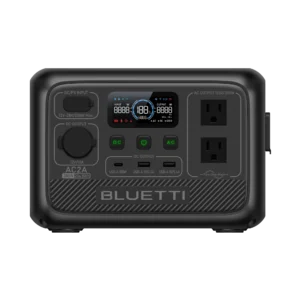
At 7.9 lbs it is the lightest box on this page, and its UPS switchover is bench-fast. It earns only a mention because its review vetoes store-and-forget use outright: a recurring deep-discharge BMS lockout with an undocumented recovery procedure requiring a car cable not included in the US box. Right only for the buyer who keeps it plugged in continuously, never on a shelf.
At 286 Wh, 600 W, and 10.4 lbs it is the only expandable unit in this class with a confirmed sub-10 ms UPS — a strong desk-UPS candidate. An unfixed firmware bug that cuts AC output when solar charging hits 100% vetoes the solar-fed-backup version of this use case. As a wired-AC desk UPS it is otherwise excellent.