

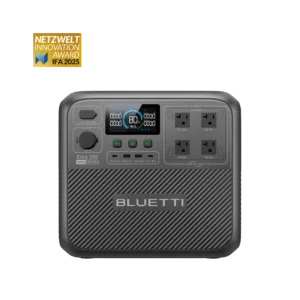
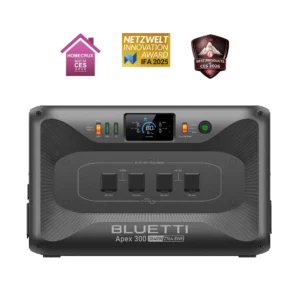

The renter’s emergency kit has one constraint that shapes everything else: the unit lives in a closet for months, then must work on day one without a warm-up charge. That shifts the deciding axis away from raw watt-hours — three units near this price sell 1,024Wh of LiFePO4 — and onto standby behavior and outlet reliability. One contender in this tier has the best solar-input number on paper and the worst standby record in practice. The pick is the one whose idle-until-needed behavior holds up and whose solar intake is genuinely usable without exotic panel wiring.
Hurricane and short-outage backup — fans, internet, TV, phones, and a fridge through a power cut — is the dominant owner use case documented across its reviews. The UPS switchover bench-measures at 8ms. The dual 500W solar ports are this segment’s most practically usable solar architecture: each port accepts 11–60V independently, so common portable panels plug straight in with no app toggle or unusual wiring. A full recharge from the wall takes about 55 minutes; independent testing confirms roughly an hour of strong sun at full 1,000W input refills it as fast. At a ~300W AC load — a cycling fridge plus devices — expect around 900Wh of usable energy; mixed lighter loads stretch further, with owner reports logging about 30% consumed over 10-plus hours of fridge-and-devices draw.
Two habits to build in before you need this unit. First, it is not an always-on UPS — idle draw runs around 32–40W, so run it on actual loads and recharge rather than leaving it plugged in continuously. Second, the battery management system’s state-of-charge gauge drifts if the unit sits without a full cycle for three to six months; put a quarterly 0–100% charge-discharge-recharge on your calendar now, while the grid is on.
Paired panel: EcoFlow NextGen 220W Bifacial Portable Solar Panel — $299. Its reviews identify the careful-deployment emergency-backup buyer as a named fit — multi-week outages are documented in owner reports — and it is the rare portable that consistently hits its rating, with real output of 180–210W front-side in strong direct sun. Its 21.5V Voc sits comfortably inside the station’s flexible port window; run one per port and you have both ports working. Handle it as the tempered glass it is: the cracking reports cluster on high-cycling users who fold and haul it constantly, which an occasional-deployment emergency buyer is not.
Skip it if: your outages run multiple days and your load is bigger than a fridge and some devices — move to the Multi-Day Fridge-and-Essentials segment and the Bluetti Elite 200 V2.
The better shelf unit and the weaker solar generator. Owner reports document 100% state of charge after months unplugged — the best idle-until-needed behavior in this tier — plus a bench-verified 46–47 minute full recharge and a sub-10ms UPS. The flip is solar: its 600W ceiling is only reachable through a 29–60V panel, and with common 11–28V portable panels real intake caps near 200W. If you pair it, the Anker SOLIX PS400 (57.6V Voc) is the catalog panel that lands inside the high-voltage window — and that pairing wins the Medical-Critical segment outright for different reasons.
One unit in this tier was set aside before scoring reached the other axes. The Bluetti Elite 100 V2 carries the best specs on paper — cheapest of the three, a class-leading 1,000W solar rating — and the clearest reliability record against emergency-standby duty. Independent testing measured standby self-discharge near 140Wh per 24 hours on the DC side. Its factory ECO mode shuts off AC outlets during low-draw idle; a documented case of a basement flood traced to a sump pump’s between-cycle pause tripping that cutoff. The 1,000W solar input unlocks only at 48–60V panel configurations through a buried app toggle. And its reviews flag a recurring early-failure cluster. Every one of those lands on exactly what this segment weights. It earns strong marks for attended mobile use; it is the wrong unit to leave armed in a closet.
Multi-day outages test a different set of qualities than a single overnight. The fridge has to cycle for two to five days. Recharge windows from a generator run or a returning grid may be short. The battery has to be large enough that one cloudy day doesn’t strand you, and the solar intake has to be real — not a number achievable only in laboratory conditions. Four credible units competed here; two fell to review findings before the comparison reached price or efficiency.
Emergency home backup is the use case its reviews call strongest and best-validated, and every axis that matters for this segment is confirmed rather than assumed. Independent bench testing measured 96% AC inverter efficiency on the full 2,073.6Wh pack, with idle draw around 9.5–10W — that combination is why a full-size refrigerator runs 22–30 hours per charge, consistently replicated across owner reports. The low idle also means you can leave the inverter on for days without meaningful drain, which is the multi-day posture this segment requires. Turbo recharge hits 80% in about an hour, so any generator run or returning grid window fills the tank fast. A 15ms UPS bridged enterprise home-lab equipment through repeated drops. The 6,000-cycle-to-80% battery rating is double several competitors’ figures. At $0.385/Wh it is also the lowest stored-energy cost among the four contenders in this segment.
There are three setup steps to do on day one, before you need the unit. Disable ECO mode — it defaults to shutting off low-draw AC loads, which is the wrong behavior for a fridge that cycles. Plan solar wiring around the 60V input ceiling: panels in parallel stay under the ceiling, series strings can exceed it. Run one full charge-discharge-recharge calibration cycle so the gauge reads accurately.
Paired panels: Bluetti PV350 — $599 (primary) or Bluetti SP200L — $349 (budget or parallel scale path). The PV350 (46.5V Voc, comfortably under the 60V ceiling) is the primary pairing: its reviews name the hurricane-and-blackout prepper with a large station as a direct fit, with real output of 280–330W in good direct sun and notably strong shade performance. The caveat: it is IP65 splash-resistant, not waterproof — bring it indoors during rain. The SP200L is the budget route; its reviews confirm emergency-prep and outage-backup as its cleanest application, owners deployed it through hurricane and winter-storm outages, and the planning figure is about 130W per panel in clear sun. Its 24.62V Voc parallels safely under the 60V ceiling; Bluetti advises not mixing panel models, so scale with one model or the other.
Skip it if: your essential circuits include a 240V well pump or furnace — that is a different problem than this segment covers; see the Whole-Home Essentials segment and the Bluetti Apex 300.
The step up when your essentials list is longer or you want more solar throughput. Spec card: 3,072Wh, 3,600W rated (note: the four NEMA 5-20R outlets are capped at 2,400W combined; the TT-30R is separate), 7,200W surge, 91.5 lbs wheeled, LiFePO4, AC recharge about 2 hours standard or roughly 1.3 hours on the 30A path, solar input 2,400W rated dual-MPPT (high-PV 11–165V/1,600W plus low-PV 11–60V/800W), $1,399, $0.455/Wh. Independent bench testing measured roughly 2,760Wh usable at the wall at low discharge and about 2,650Wh under a heavier load. Its reviews confirm about a full day of fridge-lights-WiFi per charge, idle draw around 20–35W, about 35dB at moderate load, and roughly 1,900W of real combined solar measured against the 2,400W rating — the best real solar intake in this segment. Two cautions for emergency deployment: the AC charging cable is a proprietary twist-lock with no off-the-shelf substitute, so keep a spare; and measured standby duration runs about 30% short of the five-day marketing figure.
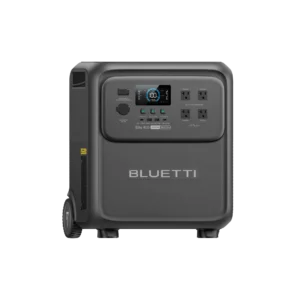
The choice when runtime matters more than solar speed. Its reviews document 3,576Wh usable at a 1,500W bench draw, AC standby idle around 12W, wheels and a telescoping handle for one-person deployment, and logged outage performance including running a furnace for 24 hours with about 40% remaining. It sits below the pick here for one reason that is specific to this topic: solar-primary is its documented weakest fit, because the 1,000W solar input is governed by a 20A/60V controller ceiling that common arrays can’t reach against a battery far larger than that input can sensibly serve. As a stored-energy reservoir it excels; as a solar generator for multi-day recharging it is mismatched. Consider it if you have reliable generator access and treat solar as a supplement.
Two units were set aside before the final comparison. The Jackery Explorer 2000 Plus specs argue for it — 2,042Wh expandable to 12kWh, 3,000W inverter, 1,400W solar rating — and its reviews veto it on this segment’s duty cycle: a documented firmware bug where, after roughly a week of continuous standby use, the unit stopped recognizing grid power and silently drained its battery; recurring owner reports of the solar input port reading zero; and a 1,440W bypass-mode cap that cuts output mid-charge. Its reviews frame these as failures at exactly the continuous-standby solar-recharge role this segment requires. For a buyer building a deliberately tested expandable platform who verifies the solar port and doesn’t rely on continuous EPS, it remains defensible — but that is a different buyer. The Anker SOLIX F3800 carries a single architectural issue that disqualifies it for 240V households and is covered under that segment; for a 120V-only essentials load it is not disqualified on the same grounds, but the runner-up above beats it on solar throughput and value here.
Wiring into a transfer switch changes the problem in one important way: the backup system has to deliver 240V and 120V simultaneously while the battery refills from a generator or grid window. If it can’t do that, a well pump or furnace stops every time you recharge — which in a multi-day outage is frequent. That recharge-while-powering capability is invisible on every spec sheet in this segment, and it inverted the expected ranking.
Three behaviors confirmed by its reviews map onto exactly what this segment requires. It delivers simultaneous 120V and 240V split-phase from one chassis while charging from a 120V wall or generator input — the architectural capability the F3800 lacks, and the one that keeps a well pump running through a recharge cycle. Standby idle bench-measures at 18–24.7W AC-on — against roughly 49W measured on the DELTA Pro 3 — which matters for a unit that sits armed between storms for weeks. Home backup wired to a transfer switch is the use case its reviews call dominant and best-supported, with owner-reported deployments running well pumps, furnaces, fridges, and kitchens on one to three paralleled units. Independent bench testing measured about 2,400Wh usable at the wall — around 87% of nameplate — at multi-circuit AC loads; a cabin running lights and internet lasted five to seven days per charge.
Carry these caveats into your planning. A single unit delivers 240V at 16A only; 30A service requires two units, 50A requires three. The base unit ships deliberately unbundled — budget separately for the solar cable, the turbo cable (needed for the faster AC recharge time above), and the Hub D1 accessory if you want DC output ports. In 240V mode under small continuous loads, pass-through draws three to four times consumed power from the grid — Bluetti-confirmed intentional behavior — so don’t run trickle loads on the 240V side day-to-day as a normal habit. One gap to know: no reliable noise figure exists for this unit; the manufacturer publishes none and independent testing has not produced one, so quietness is unverified here.
Paired panels: 2× Bluetti PV350 — $599 each. The 60V MPPT ceiling rules out series-strung standard residential panels, so the right catalog choice is Bluetti’s own low-voltage portables. The PV350 (46.5V Voc, on the Apex 300 compatibility list) delivers 280–330W real output each, one per MPPT port to start. Set real expectations from review measurements: roughly 790W per port in cold conditions, with 1,000–1,100W a realistic optimal intake ceiling against the 2,400W rating. Plan multi-day solar arithmetic on those numbers. SP200L arrays in parallel (also on the compatibility list) are the incremental scale path; don’t mix panel models.
Skip it if: you need more than 16A of 240V from a single box and you will be present to manage the system — the EcoFlow DELTA Pro 3 delivers a larger single battery and more than 16A on 240V, and that trade is worth it if you can accept its output-mode limitations.
The biggest single battery and the strongest real solar intake of the three. Spec card: 4,096Wh expandable (the top of the expansion range folds in gas generators per the manufacturer), 4,000W rated, 8,000W surge, 113.54 lbs wheeled, LiFePO4, AC recharge about 0.83 hours, solar 2,600W across two ports with review-measured real intake up to roughly 1,650W on the high-PV port plus roughly 1,150W on the low-PV port (note: the two ports carry non-overlapping voltage windows), 10ms UPS, UL9540 certified, $2,099, $0.512/Wh. Independent testing measured about 3,810Wh usable on the 120V inverter and about 3,880Wh on 240V. Owners logged 20–22 hours of fridge-furnace-water-heater coverage per charge. Why it’s second: it cannot output 120V and 240V simultaneously — firmware forces one mode at a time — and pass-through charging throttles total output to about 1,800W, so an appliance surge during a recharge cycle can trip it offline. Its reviews also carry the strongest reliability warning of the three: a long-term tester logged three firmware-fault resets in five weeks and does not recommend it for unattended critical backup. Pick it over the Apex if you need one large battery and more than 16A of 240V from a single chassis, and you plan to be present to manage it. Pair with the EcoFlow 400W Portable Solar Panel ($599; plan about 70–75% of rating, and don’t mount it permanently) or stacks of the 220W bifacial.
The Anker SOLIX F3800 was set aside on a single architectural failure that is decisive for this segment: charging via the 120V AC input disables the 240V output and three of six 120V outlets. In a multi-day outage, any 240V load — freezer, well pump — stops every time the unit recharges from a generator. Beyond that: the 60V/25A solar ceiling caps real input around 1,200W with standard panels, an Anker 400W panel measured 280W maximum in clear Texas sun, standby drain runs 50–57W, and charging slows below 50°F. The F3800 Plus ($2,499) was built to address the two sharpest failings — a higher solar voltage input and 240V pass-through charging — but it has not been put through a full review for this guide, so it appears here only as a direction worth investigating, not a recommendation.
The CPAP problem is simpler than the other segments in one way and less forgiving in every other: the load is small and predictable — 30 to 60 watts overnight — but an output interruption is not a minor inconvenience. That changes the ranking axis. In every other segment a documented reliability failure is a strike; here it is a disqualifier. Two spec-equal contenders were eliminated on documented cutoff patterns before any other comparison was made.
Its reviews carry an explicit CPAP-and-medical-device profile, and the supporting details are specific enough to trust: a bench-confirmed sub-10ms UPS switchover that owners run desktops and medical gear through without a blink, operation below 20dB under 200W loads — quiet enough to sit bedside — and a DC path that lets a CPAP run up to four nights on one charge because DC output bypasses the inverter and its fixed idle draw entirely. At a 30–60W overnight regime, the inverter’s idle tax would otherwise consume a disproportionate fraction of every watt; run the CPAP on DC. Owner reports document 100% state of charge after months unplugged — the best idle-until-needed behavior on this page — and the 46-minute full recharge means any generator run or returning grid window resets the clock completely.
One setup step is not optional: complete the initial Bluetooth app pairing at home, before an outage, or the outlets may not activate off-grid. Do this now. Two known limits that are relevant depending on your full load list: SurgePad cannot be disabled and may trip some motor and compressor loads, and the unit is not expandable. Neither matters for a CPAP; the SurgePad note matters if you also plan to run a freezer on the same station.
Paired panel: Anker SOLIX PS400 — $699.99 (full solar throughput) or any 200W-class MC4 panel at reduced input, such as the Bluetti SP200L — $349. The station’s 600W solar ceiling is only reachable through the 29–60V MPPT window; common 11–28V portable panels cap real input near 200W. The PS400 (57.6V Voc, 48V Vmp) lands squarely in the high-voltage window — independent testing measured 275–345W real output in good sun, and its reviews name the home emergency-backup owner as a direct fit, including documented cases of two panels carrying a household through a three-week post-hurricane outage. Its physical costs are real: 35.3 lbs, a known weak point in the snap-button stand, and a price close to the station’s own. The budget path is accepting the ~200W ceiling with a lighter panel; at a 30–60W CPAP regime, even 130W of real solar intake from an SP200L replaces a night’s consumption in a couple of clear-sun hours.
Skip it if: you need multi-night coverage without daily recharging and you can manage the setup requirements — the Bluetti Elite 400 delivers several CPAP-nights of margin on one charge and is detailed below.
For the household that wants four or five nights of CPAP coverage without touching the station. Its reviews carry an explicit CPAP and medical-device profile, a 15ms UPS switchover, and 3,576Wh measured usable at a 1,500W bench draw — many CPAP-nights of margin on one charge. Wheels let one person roll it to the bedroom. Two caveats are mandatory before relying on it: disable ECO mode, whose default low-load shutoff is a real risk for an intermittent medical draw, and weigh the UL 2743 compliance label — which advises against use in a sleeping room for portable storage above 1kWh, an industry-wide designation per its reviews — against bedside placement. It sits below the pick here because the C1000 Gen 2 covers one to four nights, recharges in under an hour, costs $799 less, and requires no room-placement judgment call.
The two units that looked like contenders and aren’t: the Jackery Explorer 1000 v2 ($499) and the Bluetti AC180P ($499) both spec-tie the winner and both carry named CPAP use cases in their marketing — and both are eliminated by their own review findings at this segment’s stakes. The 1000 v2’s reviews document a random AC output cutoff pattern with no configurable low-battery cutoff; the same reviews call it genuinely wrong for unattended backup. The AC180P’s reviews document a UPS lockout on messy grid transitions that kills AC output until manually reset, with a direct statement that the CPAP buyer should not make it the sole backup for life-critical equipment. Those findings are the verdict.