
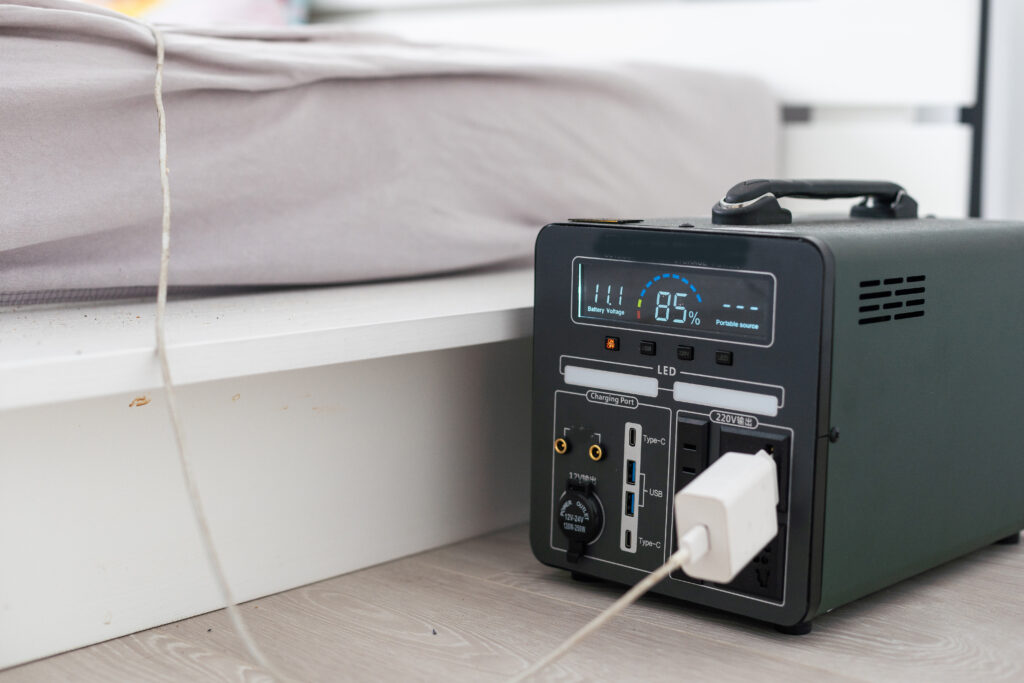

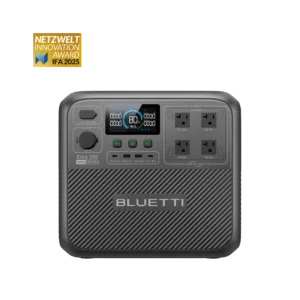
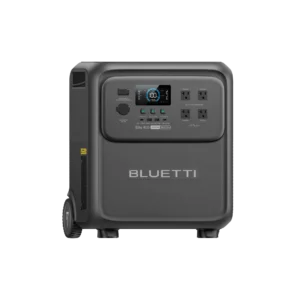
The unit on this shelf gets used every day — charging phones overnight, keeping a router alive during a blip, running a 12V cooler on a drive. It needs to be ready the moment you reach for it, quiet enough to leave running in a bedroom, and fast enough to refill before the next use. For this buyer, the spec-sheet leaders each carry a flaw that lands exactly where it hurts most.
The C300 is effectively silent in normal use — fan noise that owners describe as imperceptible, confirmed by independent testing that also verified a clean pure-sine output (120.2V / 60.1Hz on a scope). That matters twice over: a dry-mode CPAP and sensitive electronics run without complaint, and you can leave it cycling beside a bed without knowing it’s there.
For a unit you charge every day, refill speed is the practical heart of usability. Independent bench testing put a full recharge at roughly 66 minutes from any standard outlet, with no external brick to lose or forget. The C300’s 10ms UPS with a firmware-fixed auto-restore means a router or modem never blinks during a grid hiccup — owners use it as a credible network backup. Dual 140W USB-C ports handle a laptop and a device simultaneously, which is unusual at this size.
Two limits to know before loading it up: the 300W AC ceiling rules out anything with a heating element (kettle, hair dryer, toaster), and the USB-C output ports will auto-shutoff after roughly two hours under a very low continuous draw — relevant if you plan to run a router from USB alone for an extended stretch. For that duty, use the AC output instead.
One planning note for the whole segment: at 288 Wh, this unit — and every competitor in this class — exceeds the 100 Wh carry-on airline limit and the 160 Wh with-approval ceiling. None of these is a travel-by-air unit.
Skip it if: you occasionally need to run something with a heating element or a motor — the Bluetti Elite 30 V2‘s 600W output handles those loads for $101 less, as long as you’re willing to manage its idle-drain behavior.
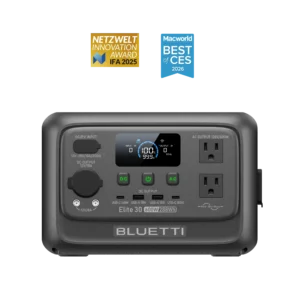
At $199 and $0.691/Wh, the Elite 30 V2 is the cheapest unit in this class and doubles the C300’s output ceiling (600W rated, 1,500W surge in its voltage-boosting mode) — genuinely useful for the occasional bigger pull. Independent testing measured a 51–70-minute wall recharge, and its dual USB-C ports (140W + 100W, measured 240W combined) are a standout. UPS switchover lands between sub-10ms and ~45ms depending on conditions, with no perceptible interruption reported by owners.
What keeps it off the top spot is an always-ready standby problem. With ECO mode off, independent testing documented 11–19W idle drain — enough to empty the pack overnight under a small load. ECO mode is the logical fix, but it will shut the unit off under exactly the small loads this segment runs: a router trickle-charging, a phone at the end of a cycle. For a unit you keep ready and rely on to be there, that trap is exactly what the C300 sidesteps. The Elite 30 V2 is the right call if you want more output and lower cost and you actively manage charge state rather than trusting the unit to sit ready.
The strongest spec of the three — 600W output, capacity expandable to 858 Wh, sub-10ms UPS, and a $269 price — but owner reports document a chemical or plastic odor strong enough that multiple buyers returned units, with replacements often exhibiting the same smell. For something you keep on a desk or bedroom shelf, that pattern is disqualifying regardless of the spec sheet.
This is the most common LiFePO4 purchase: one unit that handles a weekend campsite, a weekend RV hookup failure, and a multi-hour grid outage at home without asking you to think too hard about which box to grab. The finalists here are genuinely close — 1,024–1,070 Wh, 1,500–2,000W output, 24–28 lb, similar pricing. Nothing on paper dominates. The tiebreak belongs to the buyer who’s going to cycle this thing regularly for years, which means it falls to reliability: which unit’s real-world record is clean enough to trust unattended.
The C1000 Gen 2 wins this class on two things that compound for a regularly-cycled unit: it’s the fastest to refill and the quietest to live with. Independent bench testing measured a full recharge in 46–47 minutes — dead to full in under a coffee break, which is the practical meaning of ‘all-rounder’ for a unit you cycle regularly. At under 20 dB below 200W, it’s the unit you can sleep beside on a campsite without negotiating with your tent-mate.
It’s also the lightest finalist at 24.9 lb, bench-verified sub-10ms UPS for desktops and networking gear, and owners report full charges after months sitting unplugged — the kind of endurance the LiFePO4 label promises, showing up in real use. The 4,000-cycle rating is manufacturer-stated and corroborated by those owner reports, though not independently verified over a long run.
There are two real limits. The Gen 2 dropped the expansion port, so 1,024 Wh is permanent — this unit doesn’t grow. And its non-disableable SurgePad can stall some motor-driven loads (certain saws, some microwaves) because it manages surge differently than a plain inverter; test your specific tools before depending on it.
Skip it if: you expect to want more than 1 kWh eventually — the EcoFlow DELTA 3 expands to 5 kWh and is worth the modest premium for anyone who might outgrow a fixed tank.
The DELTA 3 is the right choice the moment expandability enters the picture. It’s the only unit in this class that grows — up to 5 kWh via a DELTA Pro 3 battery — and it backs that up with a measured 54–56 minute full wall recharge, six AC outlets, a 12V port, and a genuinely quiet 32–33 dB at max charge. At $519 and $0.507/Wh it’s a small step up from the C1000 Gen 2 in price and a modest step back in recharge speed and weight (27.6 lb).
What tips the tie to the C1000 Gen 2 is a cleaner real-world record. The DELTA 3’s review flags two things that matter for a unit you’d run unattended: EcoFlow’s warranty process requires shipping the unit back before a replacement ships, with no US phone support; and independent testing documented a cutoff mid-job on a sustained 375W load (a 3D printer), well below the 1,800W rating. Neither is a dealbreaker for general camping and outage use — but against a competitor with no equivalent caveat, they’re the margin. If you’re in the EcoFlow ecosystem or expandability is the priority, the DELTA 3 is the pick.
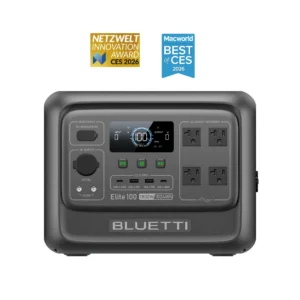
The best acquisition value in the class ($399, $0.39/Wh) and the highest solar input ceiling (1,000W) — the standout for a buyer who charges primarily from panels and is present when it runs. Held back by two review-documented failures that matter for a ‘rely on it’ buyer: a default ECO-mode shutoff that cut a sump pump between cycles and caused a basement flood, and an early-failure cluster (units arriving dead or failing within six months) with warranty service that owners found slow. For an attended camper who charges from solar, it’s excellent. For anyone running it unattended, those are disqualifying.
Also worth naming: the Jackery Explorer 1000 v2 is the lightest unit in this class (23.8 lb) and charges quickly, but owner reports and independent testing across multiple V2 units document a silent AC output drop pattern with no configurable low-battery cutoff — wrong for any unattended backup, and a risk not worth taking on a unit you won’t be watching.
This buyer doesn’t need the lightest box or the fastest camping recharge. They need a unit parked next to the fridge that will still be doing its job in a decade — surviving season after season of outage cycles without a cell-chemistry cliff. For this segment, the chemistry the whole topic is named for finally runs the decision outright: cycle life is the axis, and the gap between the finalists on that axis is not close.
The Elite 200 V2 carries a 6,000-cycle rating to 80% — roughly double the 3,000–4,000 cycles most competitors in this class claim. On the one axis this segment is built around, nothing else here is competitive. That rating is manufacturer-stated and corroborated by review evidence, not independently tested over a decade, but the directional gap is large enough to hold across any reasonable discount.
The efficiency story backs it up. Independent bench testing measured the inverter at 96% efficiency with an idle draw near 9.5–10 watts — the lowest in this class. That’s why owners report running a full-size fridge for 22–30 hours on a single charge: the big battery isn’t bled by the electronics keeping it alive. The 15ms UPS is fast enough that owners run desktops, servers, and networking gear through outages without a reboot; one owner runs it as a UPS for mobility-aid equipment. Turbo recharge hits 80% in roughly an hour, which is enough to top it off during a short generator window in a multi-day outage.
Before you depend on it for always-on loads, change one setting: disable ECO mode. Left on its default, ECO mode will cut power to any low-watt continuous draw — the kind of thing a reptile enclosure or a medical device represents. Turn it off at setup and leave it off. Two more structural notes: the unit doesn’t expand (2,073.6 Wh is its permanent ceiling), and the 1,000W solar figure requires panels wired in parallel to land between roughly 48–60V — series wiring exceeds the 60V controller ceiling and won’t work.
Skip it if: you expect to want more than 2 kWh later — the Anker C2000 Gen 2 expands to 4,096 Wh via a BP2000 battery and is the only expandable unit in this class.
The C2000 Gen 2 is the right pick the moment future expandability matters. It’s the only unit in this segment that grows — to 4,096 Wh with one expansion battery — and its own review calls it a ‘Strong Buy,’ the strongest single-reviewer verdict in the segment. At 41.7 lb it’s meaningfully lighter than the Elite 200 V2, and independent testing measured a full AC recharge in 80–90 minutes with a class-leading inverter-on idle near 9W.
What it concedes is cycle life: 4,000 cycles versus the Elite 200 V2’s 6,000. For a unit you’re cycling through years of outages, that’s a direct loss on the segment’s defining axis. Its review also documents that the marketing claim of 32 hours of fridge runtime halves to roughly 14–22 hours under real conditions. For a buyer focused on raw longevity over a fixed-size bank, the Elite 200 V2 is ahead. For a buyer who wants room to grow or values a cleaner single-reviewer endorsement, the C2000 Gen 2 is the better fit.
The cheapest per watt-hour in this segment ($749, $0.366/Wh) and the fastest AC recharge (68 minutes), with a clean sub-10ms UPS. The reason it’s not higher: EcoFlow has not published a cycles-to-80% figure for this specific unit — a real gap when longevity is the whole point of the segment. It also doesn’t expand, and its single-MPPT 500W solar ceiling means panel refills take four-plus hours. The ‘Max’ name is a trap; the line’s flagship is the Max Plus, not this.
Also worth naming: the Jackery Explorer 2000 v2 is the lightest option at 39.5 lb, but it shares the same silent output-drop and no-cutoff pattern documented across Jackery’s V2 line — disqualifying for unattended fridge backup, which is the whole job description here.
This buyer ran the numbers. LiFePO4 costs more upfront, and the whole premise is that it pays back in cycle life — so the question becomes how to maximize stored energy per dollar while keeping the chemistry honest. One axis runs this segment: dollars per watt-hour, with the review confirming those watt-hours are real.
The Elite 400 holds the lowest acquisition cost per watt-hour across every LiFePO4 portable unit in this guide — $0.338/Wh — and the dollars buy real watt-hours: independent bench testing measured 3,576 Wh usable from the 3,840 Wh nameplate under a 1,500W draw, a 93% return that almost nothing in this category matches. A roughly 12W AC idle means the big reserve isn’t quietly draining itself between uses. The rolling chassis makes 86 lb a manageable one-person horizontal move. The 15ms UPS handoff covers the essentials.
The trade-offs are structural and worth naming plainly. Output is capped at 2,600W — running a kettle, a fridge, and a well pump simultaneously isn’t possible. It’s 120V only; no 240V. There’s no expansion path. And the published 1,000W solar input is unreachable in practice due to the controller’s 20A/60V ceiling — plan around a realistic panel setup, not the box figure. For a buyer stacking reserve energy, those constraints are acceptable. For a buyer who needs high simultaneous output or 240V capability, they’re disqualifying — and that buyer belongs in the last segment of this guide.
Skip it if: you need the value in a unit you can actually carry — the Bluetti AC180P delivers the second-lowest $/Wh in this class at 35.3 lb, one-hand-carry weight.
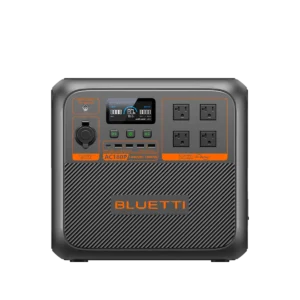
The AC180P is the value argument for a unit you’ll actually move. At 35.3 lb and $499, it delivers 1,440 Wh at $0.347/Wh — the second-lowest cost per watt-hour here, in a body you can carry with one hand. The 1,800W inverter runs nearly any single 120V appliance, the cells carry a 3,500-cycle rating with a five-year warranty, and the capacity-to-weight ratio is the strongest in the AC180 form factor.
The Elite 400 still beats it on both dimensions that define this segment: 2.7 times more stored energy at an even lower per-Wh cost. Two review-documented demerits also land here: the battery expansion Bluetti marketed for this unit does not exist, so 1,440 Wh is permanent regardless of what the listing implies; and on a messy grid transition the UPS can lock out AC output until you manually reset it. For a buyer who prizes portability alongside value, the AC180P is the right call. For pure reserve energy per dollar, the Elite 400 is in a different category.
A deliberate cross-reference: the Elite 200 V2 wins the home-backup segment on endurance, and its 6,000-cycle rating makes it the cheapest energy over a unit’s lifetime — the truer economics lens for a LiFePO4 buyer. The Elite 400’s $0.338/Wh acquisition cost beats it on sticker price, but the Elite 200 V2’s cycle depth closes that gap and then some over years of use. If ‘value’ means lifetime cost rather than lowest entry price, the home-backup pick is also the value pick.
True 240V — a well pump, an electric dryer, a 240V shop tool — requires native split-phase output. That’s a physical capability, and every 120V-only unit on this page is out regardless of what a hub or adapter might promise. Among the units that clear it, the live question is portability: this is still a guide to portable stations, and ‘portable’ does real work when the units weigh over 100 lb.
The DELTA Pro 3 is the lightest native-240V unit here by a meaningful margin, and its review names it the genuinely portable option in the split-phase class — wheels, a telescoping handle, and a body that one person can actually reposition. In a segment where everything clears the 240V bar, portability is the tiebreaker, and the DELTA Pro 3 wins it. Single-unit native 120V/240V (no second unit required), 10ms UPS on the 120V side, UL9540 certification for 24/7 indoor use, and a 4,096 Wh base battery are all present. Owners report running a fridge, furnace, and water heater for 20–22 hours on a charge, and fridge-only use stretches to around 28 hours. The single-unit battery ceiling is 12 kWh — the 48 kWh figure in some marketing requires three units plus gas generators and is not a solo-unit number.
Three limits that belong in your planning before you depend on this unit. First, it cannot output 120V and 240V simultaneously — firmware forces one mode at a time, so a split circuit that needs both simultaneously needs a different box. Second, pass-through AC charging while running drops total output to roughly 1,800W, which matters if you’re generator-recharging under load during a multi-day outage. Third, and most important for critical loads: the review documents three firmware-triggered resets in five weeks of use. This unit is not trustworthy for unattended medical or life-safety loads — eyes on it, or choose otherwise.
The measured surge figure to plan around is roughly 5,100W held for about a minute, with shutdown near 6,000W. The rated 8,000W figure is not what you’ll see under a real heavy load.
Skip it if: you need to run 120V and 240V circuits simultaneously, or if the lower price is the priority — the Anker F3800 handles both and costs $300 less, at the cost of about 19 lb and a recharge-while-running limitation of its own.
The F3800 has two real edges over the DELTA Pro 3: it’s the only unit here that runs 120V and 240V simultaneously, and at $1,799 it’s the cheapest native-240V option with the lowest $/Wh of the set ($0.468). Its 6,000W continuous output (9,000W surge rated) is the highest in the segment, it’s expandable to 26.9 kWh, and it runs quietly under load. The AC recharge time is approximately 2.5 hours, derived from review evidence rather than a published spec — not treated as zero, but treat it as an estimate.
The sharpest flaw in this segment belongs to the F3800: charging from the 120V AC input disables the 240V output and three of its six 120V outlets. Practically, that means you cannot recharge from a generator while running 240V loads during a multi-day outage — the scenario this class of unit exists for. The F3800 Plus was released specifically to address this limitation and the solar ceiling. If simultaneous dual-voltage or the lower price is the priority, the F3800 is the right pick. If uninterrupted 240V during generator recharge is the job, look at the Plus variant or the DELTA Pro 3.
The strongest inverter in this field (7,200W continuous, with independent testing confirming it ran dual RV air conditioners plus a 2,400W well pump simultaneously), the largest base battery (5,040 Wh), the fastest large-array solar input (4,000W), and the deepest expansion path (60 kWh). It earns an honorable mention and not a higher placement because its own review is direct: it is a permanent-install backup system that happens to have wheels. At 134.5 lb, IP20 indoor-only rating, and a 240V home integration that requires a Smart Transfer Switch and a licensed electrician, ‘portable’ is a generous description. The measured surge figure is approximately 9,500W for about 20 seconds — the 14,400W rated figure is not real-world; and the 50A port is rated for 30A service. If your situation is genuinely a fixed outdoor or garage installation that needs this level of output, it’s the strongest option here. If you need to move it, it isn’t.