
When you purchase through links on our site, we may earn an affiliate commission. Learn more.
A CPAP machine runs at 30–60 watts — low enough that almost any portable power station looks like it should handle it. The catch is that an AC inverter carries a fixed idle draw that can rival the CPAP load itself, so a unit advertising 300 watt-hours may deliver far less than that where it counts. And once you add a heated humidifier, the load climbs, the math changes again, and the 288Wh class mostly falls short of a full night. The right pick depends less on nameplate capacity than on which port you use, whether the humidifier travels with you, and what ‘backup’ actually means — one missed night or one missed week.
There is no single best power station for CPAP. The backpacker running dry off a 12V cable has opposite needs from the therapy-dependent sleeper who needs four nights of coverage through an extended outage. This page matches buyers to segments first, then names the strongest pick within each one — every figure matched to the port and load the buyer actually runs, every pick confirmed by real-world evidence at that regime, not box-copy math.
Use the table below to find your situation, then read that section for the full case.
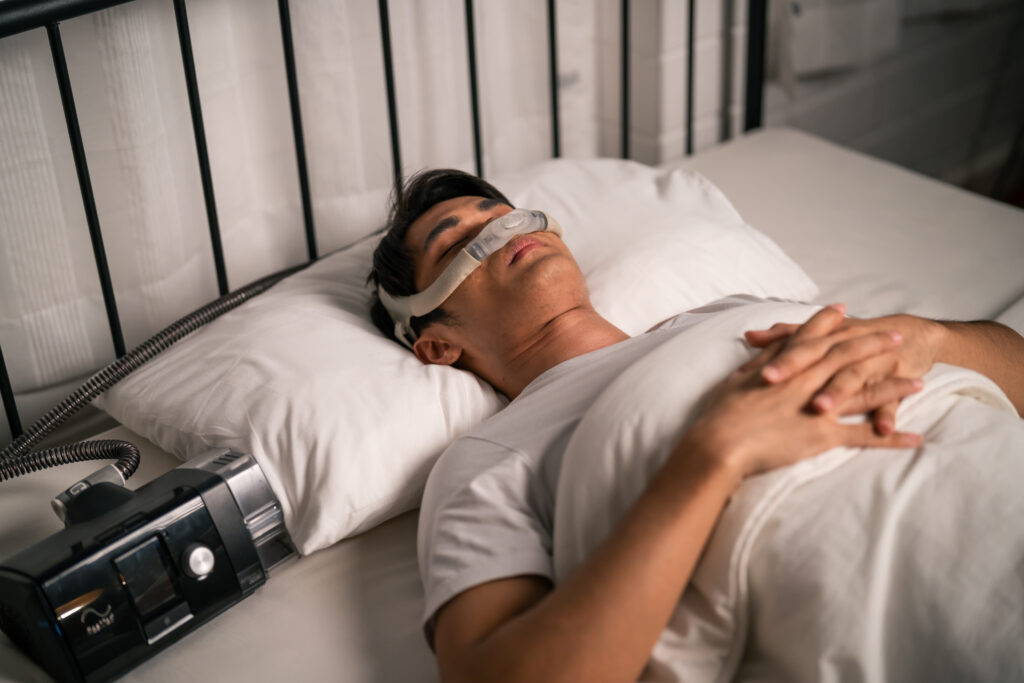
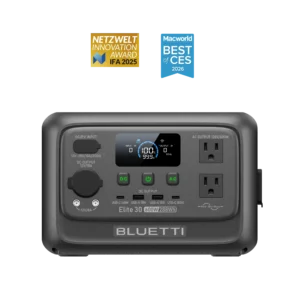
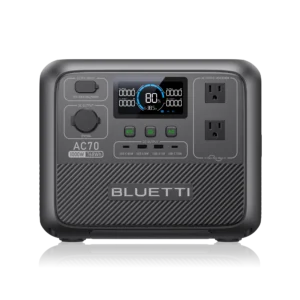

The job here is narrow and unforgiving: the unit sits beside the bed, wall power flows through it normally, and when the grid drops mid-sleep it takes over before the CPAP notices — humidifier on, heated tube running, no alarm, no gap. The unit has to be quiet enough to sleep next to and has to cover a full night in the worst case. That combination — UPS pass-through, humidified-load runtime, near-silent operation — is where most of the field thins out.
Four units in the 288Wh LiFePO4 class look identical on a spec sheet: all UPS-capable at 10–20ms, all pure sine, all near the same price. What separates them is what owners and independent testing actually found at this exact regime — CPAP running overnight, humidifier on, through real outages — and only one of the four has that evidence. Owners who bought the RIVER 3 Plus specifically for CPAP backup measured roughly 25–35% battery drain per humidified night at moderate pressure, confirming two-plus nights of coverage per charge through actual outages. The sub-10ms switchover is bench-verified and owner-confirmed: desktops and NAS units ride through outages without a reboot on this station, so a CPAP does not blink either. The fan is barely audible even under full load — bedroom-viable around the clock, per owners who have run it that way. And a full wall recharge lands in about an hour, so even a long outage is a one-hour reset.
Two things to check before you depend on it. A recurring chemical or plastic smell during charging led some owners to return units — run it through a few charge cycles in a ventilated space on arrival and confirm yours is clean before it goes bedside. The bigger catch applies only if your plan ever extends to solar-fed backup: a firmware bug cuts AC output when solar tops the battery to 100%, and EcoFlow has not fixed it. For a wall-fed bedside UPS, that bug is completely irrelevant. For unattended solar-fed multi-night duty, it is disqualifying — see the multi-night backup segment for the right path there.
Skip it if: you plan to run it on solar without attending it — the solar-charging firmware bug makes it unreliable for that duty; go to the multi-night backup segment instead.
The quietest unit in the set — 25 dB rated, fan effectively silent under load — with a confirmed 10ms switchover and scope-verified pure sine output. It earns a runner-up slot with one hard condition: it works for dry sleepers only. Independent testing confirmed multiple nights of CPAP coverage with the humidifier and heated tube off; with both running, measured draw around 54W yields 2.5–3.5 hours — well short of a full night. If you sleep dry, it is a fine bedside UPS, arguably quieter than the pick. If humidity is non-negotiable, it fails the full-night requirement before anything else matters.
Three units from this class were considered and placed elsewhere or cut. The BLUETTI Elite 30 V2 wins Segment 2 and belongs there: at this segment’s humidified AC load, it reports around 6 hours — short of a full night — and its standby behavior is a trap for inline duty, with an idle draw of 11–19W when eco mode is off, while eco mode on can shut output off under the small loads a resting CPAP presents. The Jackery Explorer 300 v2 — lightest of the group — was demoted on certainty rather than a documented failure: its own review explicitly calls its overnight CPAP figure ‘a calculated estimate, not a firsthand overnight test’ and steers CPAP-primary buyers to verify before relying on it. That caveat disqualifies it for a medical-criticality segment. The Bluetti AC2P is the cheapest and lightest UPS-capable unit in this class at $129 and 7.9 lbs, and it is excluded on a direct reliability veto: a recurring, unresolved pattern of units refusing to power on after idle storage or a grid event (E113/E116 error codes, troubleshooting-first support). A bedside medical backup’s entire job is waking up when the grid drops; a documented failure mode triggered by exactly that event is disqualifying regardless of price.
The physics of this segment are completely different from the bedside case. Running the CPAP off the 12V DC port via a converter cable bypasses the AC inverter entirely — its idle draw disappears — and usable energy climbs close to the pack’s actual ceiling. Small stations that look modest on paper suddenly have enough capacity for multiple nights. The question is which one has the DC-CPAP evidence to back that up.
Thirty-plus hours of dry CPAP runtime off the 12V DC port — that is the documented figure for the Elite 30 V2 on an AirSense 10, owner-reported and corroborated by bench testing that pulled 274 Wh usable over the DC path, roughly 95% of nameplate. That runtime is not a coincidence of the load being light; it is a direct result of bypassing the inverter entirely. Independent testing on a second unit in this class measured CPAP draw at roughly 8W per hour over a 12V DC brick versus around 20W per hour through an AC inverter — the same several-fold multiplier behind the Elite 30 V2’s figure. At 9.48 lbs with an integrated handle and a car charging cable included, it is a genuine one-hand carry. At $199 and $0.69/Wh it is the cheapest and best-value unit across this entire comparison. Turbo wall recharge lands at full in 51–70 minutes bench-measured, so a hotel stop or a café visit resets it for days. Its 200W solar input ceiling is double the input of most spec-identical competitors, useful for off-grid topping on longer trips.
One important note on the regime boundary: this unit’s roughly 6-hour humidified-AC figure belongs to a different segment running a different load at a different port — the 30-plus-hour figure is valid here and nowhere else, and the 6-hour figure is not a ceiling for this buyer. They describe the same battery doing two different jobs.
A few practical limits for the trip. It will not charge below 32°F — a real constraint on winter camping; keep it warm in the car or tent during cold nights when you need to top it up. The solar charging cable is not in the standard box, so budget for it if a panel is part of your kit. And the whole strategy depends on a 12V DC converter cable specific to your CPAP model — confirm compatibility and carry a spare.
Skip it if: you need the humidifier — that load bumps you to the humidifier-on camping segment, where a 768Wh pack is the right size.
Nearly identical weight at 9.1 lbs and the quietest of the group, with its review confirming multiple nights of dry CPAP — but without a quantified runtime figure, and its solar input tops out at 100W versus the pick’s 200W. At $101 more, without the specific DC-path runtime number the Elite 30 V2 carries, it is a solid alternative for the buyer who prioritizes silence or prefers Anker’s ecosystem. Do not run the CPAP off its USB-C port — a two-hour low-current auto-shutoff on that port makes it unreliable for overnight use; the 12V port is the correct path here too.
Two units from this class did not make the cut. The Jackery Explorer 300 v2 is the lightest option at 8.16 lbs, and weight alone is not enough: its own review explicitly states that its CPAP runtime figure is untested, and a medical segment needs matched-regime evidence, not the lightest carry. The Bluetti AC2P at $129 and 7.9 lbs is excluded for the same reason it loses Segment 1 — no CPAP evidence at any regime and a documented pattern of units failing to power on after idle storage, which is precisely the rhythm of a between-trips travel unit.
Deciding to keep the humidifier running at camp is a single choice that restructures everything. The load climbs to roughly 50–90 watts through the AC inverter, and a full 7–9 hour night at that draw requires a pack in the 600Wh-plus class. Every 288Wh unit on this page falls short — best case around 6 hours, worst case under 3 — so the smaller segment picks are hard-gated out here before anything else is evaluated.
The AC70 earns the win by doing exactly what this segment asks and doing it where the others cannot: owners report 7.5–8.5 hours of CPAP with the humidifier and heated tube running, waking up with more than 30% remaining — a full humidified night per charge with margin left over, confirmed at the actual regime. That is the only matched-regime overnight confirmation in this tier. Pure sine output is bench-confirmed clean for medical devices. At $0.45/Wh it is the cheapest energy in this entire comparison, and its 500W solar input ceiling is the highest in its weight class — a single 200W panel delivers a real-world 185–195W in good conditions for a roughly 4-hour refill, two panels halve that. The drive-out top-up is handled in 43–47 minutes to 80% in turbo mode.
There are two catches that matter before you commit. A documented cluster of first-year hardware failures — DC-port E065 errors acknowledged by Bluetti, plus screen and charging failures on some units — makes arrival testing important for a medical-use purchase: register it, run it through a full charge-discharge cycle, and check outlet polarity with an inexpensive tester before the trip. On nighttime noise: no owner complaint about fan noise at CPAP loads exists in the review record, but that absence has not been positively confirmed either. Noise confidence here is moderate, not settled — if silence is critical, the absence of a complaint is encouraging but not a guarantee.
Skip it if: you can sleep dry — dropping the humidifier drops you to a much lighter carry; the minimalist travel segment handles that buyer at less than half the weight.
The lighter option at 16.1 lbs versus 22.5 lbs, and a real choice if you are willing to run closer to dry. Two specific limits keep it from the win. Its strong multi-night CPAP figure was achieved on the 12V DC adapter with the humidifier off — that number cannot be carried into this segment’s humidified-AC scenario, and no matched-regime overnight figure for it exists at this load. And its review documents the cooling fan ramping audibly under thermal load and waking a light-sleeping owner about 5.5 hours into the night. In a tent with the unit at your head, that is a direct problem. It is genuinely excellent as a dry-DC camper wanting more reserve than the 288Wh picks carry, which is exactly the logic of the minimalist travel segment.
Two other units were demoted from this segment on review evidence. The EcoFlow RIVER 2 Pro is the AC70’s closest spec match — same 768Wh, 4.3 lbs lighter, $10 cheaper — and it would be the easy winner if its regime evidence matched. It does not: its CPAP figure of 3–5 nights per charge was measured at roughly 8W per hour on a 12V DC brick with the humidifier off, which is Segment 2’s regime rather than this one. No humidified-AC overnight figure exists for it. Beyond the regime mismatch, its fan is described as erratic, peaking at 61–62 dB, with no AC pass-through mode — meaning the fan runs continuously whenever AC output is active, which is all night here — and its review explicitly rules it out for light sleepers. The dry-DC buyer wanting deeper reserves than the Elite 30 V2 offers should look at this unit carefully; the humidified-AC camper should not. The EcoFlow DELTA 3 was not evaluated for this segment.
This is the segment where the stakes restructure the scoring. Weight and price recede; the unit mostly sits. What rises is coverage depth — several nights of CPAP without grid access — and above that, a credible failure-recovery story. A unit that does the job 95% of the time and leaves a therapy-dependent sleeper without support for weeks while warranty repairs happen is worse than a unit that costs more and carries less capacity, if that second unit has the reliability record to match.
Up to four nights of CPAP per charge running over DC or USB-C direct — bypassing the AC inverter — is the confirmed runtime figure for the C1000 Gen 2 at this segment’s load. The sub-10ms UPS is bench-verified and owner-validated on always-on gear; a CPAP mid-breath does not notice the switch. Under 20 dB below 200W means it is bedside-silent at CPAP draw — this is one of the few picks on the page where that has been positively confirmed rather than inferred from silence. The fastest independently measured recharge in its class at 46–47 minutes means a brief generator run or a window of grid power fully restores four more nights. LiFePO4 chemistry, 4,000 rated cycles, and a 5-year warranty build the long-term case. Owners report it holding a full charge after months unplugged, which is exactly the standby behavior a unit needs when its job is to wait.
Four setup steps matter before you need it — do these at home, not during an outage. Complete the initial Bluetooth app pairing on first use; owners report outlets may not activate off-grid without it. Never push a firmware update while the CPAP is running on the unit — firmware updates cut outputs mid-process. UltraFast charging requires cell temperatures above 68°F and slows in cold conditions, so plan recharge timing in winter. The 600W solar input ceiling requires higher-voltage panels (29–60V); common residential panels typically run 11–28V and will cap input near 200W — plan panel selection around voltage, not just wattage rating. One structural limit: this unit is not expandable. If four nights at this load ever feels tight, the upgrade path is a larger unit, not an add-on battery.
Skip it if: you need the humidifier across multiple nights — the runner-up below has the matched-regime evidence for that load the pick does not.
The only unit in the 1 kWh class with review-confirmed humidified multi-night coverage: 2 nights with the humidifier on, 4-plus nights running dry off DC output, and a 20ms switchover reported as faster than spec. At 23.8 lbs it is the lightest in the class, and measured noise under 22 dB in standard charging mode. If the humidifier is non-negotiable across a multi-night outage, this unit has the evidence the pick lacks.
What keeps it from the win is the reliability axis this segment weights above everything. Its review documents a silent AC-output-cutoff pattern — the unit stays lit and shows no alarm while output simply stops — and no configurable low-battery cutoff in the entire V2 series. An early-failure cluster with fault codes appearing within 6–11 months is in the record, and the review’s explicit verdict against unattended multi-day deployment is the deciding line: a sleeping therapy user is functionally unattended. If you choose it, run the CPAP off the DC output rather than AC (the cutoff pattern is AC-side), plan around roughly 900 Wh usable on AC per support-confirmed figures, and buy from a channel with a real return window. The review’s own steer for always-on hands-off duty points to the Jackery 1000 Plus, which adds a configurable cutoff and expansion options the v2 lacks — that unit was not evaluated for this page.
Two other units were considered and demoted on this segment’s specific ground. The EcoFlow DELTA 3 matches or beats the pick on every spec — 1,024 Wh, sub-10ms UPS, expandable to 5 kWh, 56-minute recharge — and it is demoted anyway. Its own review, specifically asked about CPAP and medical backup, answers that if the unit fails, EcoFlow’s warranty process leaves a user without a fallback for weeks; for a primary-dependency medical device, that support gap matters more than the specs. The review separately documents an AC outlet cutting off under a sustained sensitive load well below rating and a 17.6W inverter idle that self-depletes the pack in days when left on. For general home backup it is a strong unit; for therapy-dependent multi-night duty the review’s verdict is the verdict. The Bluetti Elite 100 V2 is $101 cheaper at the same 1,024 Wh, with a class-leading 1,000W solar input — and its own review closes the question for this segment explicitly: using it to guard a medical device unattended is called ‘a genuine mistake,’ on documented grounds including ECO mode shutting off AC outlets during low-draw idle (causing a real failure on a cycling critical load despite correct UPS configuration) and a recurring early-failure pattern of dead-on-arrival units and BMS faults within the first six months. Strong mobile camping unit; the wrong reliability profile here.
Picks on this page come from deciding what the use case actually rewards — then judging each unit by how it behaves under those conditions, not by how it reads on a spec sheet. The criteria that matter shift with the job, so a unit that’s decisive in one segment can be disqualified in the next by a single behavior. Where two contenders cleared the same bar, documented performance under real load settled the pick, not a comparison of rated numbers.
CPAP is one of the most misleading power-station use cases precisely because the wattage looks manageable. The real variables — inverter idle draw, port choice, humidifier load, switchover speed, standby behavior — can swing a unit from ‘three nights of coverage’ to ‘not a full night’ on the same nameplate capacity. So the judgment here rests on measured and owner-reported performance at the exact regime each buyer runs: the right port, the right load, overnight duration, with the humidifier on or off as the segment requires.
Beyond runtime, two axes carry extra weight throughout. Switchover speed matters in a way it does not for most loads — a CPAP losing power mid-breath is a medical event, not an inconvenience, so sub-20ms UPS behavior is a hard requirement for any bedside pick. And reliability evidence — owner reports of units behaving predictably through real outages and across months of standby — outranks every spec advantage when the device is medical-adjacent. Several otherwise strong contenders are placed lower or excluded entirely on that ground alone.
The DC-port strategy runs through nearly every segment. Running a CPAP off the 12V output instead of the AC inverter eliminates the inverter’s idle tax and can multiply runtime several times over; where a unit’s DC-path evidence is documented, it governs the runtime figure. Nameplate capacity is never used as a runtime proxy — every figure on this page comes from matched-regime evidence, and where that evidence does not exist for a unit, the unit is not placed in the segments that need it.
The picks above answer “which one for my situation.” This table answers “show me everything, I’ll decide.” It lays every unit out on the same axes used to make the calls — measured behavior, not nameplate specs — so a reader whose priorities cross segments can weigh the tradeoffs directly instead of trusting our segmentation.
| Unit | Capacity | Rated output | Surge | Weight | AC recharge | Solar input | Price | $/Wh | Buy |
|---|---|---|---|---|---|---|---|---|---|
| EcoFlow RIVER 3 Plus | 286 Wh | 600 W | 1,200 W | 10.4 lbs | ~1.0 h | 220 W | $269 | $0.94 | Check price |
| Anker SOLIX C300 | — | — | — | 9.1 lbs | — | 100 W | $300 | — | Check price |
| BLUETTI Elite 30 V2 | 288 Wh | 600 W | 1,500 W | 9.48 lbs | ~1.17 h | 200 W | $199 | $0.69 | Check price |
| Bluetti AC70 | 768 Wh | 1,000 W | 2,000 W | 22.5 lbs | ~1.5 h | 500 W | $349 | $0.45 | Check price |
| Jackery Explorer 600 Plus | — | — | — | 16.1 lbs | — | — | $429 | — | Check price |
| Anker SOLIX C1000 Gen 2 | 1,024 Wh | 2,000 W | 3,000 W | 24.9 lbs | ~0.82 h | 600 W | $500 | $0.49 | Check price |
| Jackery Explorer 1000 v2 | — | — | — | 23.8 lbs | — | — | $499 | — | Check price |
— = not independently verified for this guide, or the maker publishes no figure for this cell.
The questions here are the ones that don’t belong to any single pick — the cross-cutting concerns that come up regardless of which unit a reader lands on. We pulled them out of the individual segments so each answer lives in one place, addressed against the same standard of evidence used throughout the page.
Yes, and the difference is substantial. Running a CPAP through the AC inverter means the inverter’s fixed idle draw — often 10–20 watts — runs alongside the machine the entire night. At a CPAP’s low wattage, that overhead can double the effective draw. Bypassing the inverter with a 12V DC converter cable (specific to your CPAP model) eliminates that tax entirely, and usable energy climbs close to the pack’s actual ceiling. Independent testing on one unit in this class measured CPAP draw at roughly 8 watts per hour over a 12V DC brick versus roughly 20 watts per hour through the AC inverter. The BLUETTI Elite 30 V2‘s review documents this directly: owners reported 30-plus hours of dry CPAP off the DC port on an AirSense 10, against roughly 3.5 hours on AC from the same battery. The DC cable costs relatively little and is the highest-leverage accessory on this page if your machine supports it.
A UPS (uninterruptible power supply) pass-through means the unit sits between the wall and your devices — power flows from the wall to your CPAP during normal operation, and when grid power drops, the battery takes over within milliseconds. The CPAP never sees a gap, never resets, and the session continues uninterrupted. Without pass-through, you would need to manually switch the CPAP to battery power before an outage, which is not useful for mid-sleep protection.
Three picks on this page have confirmed sub-20ms UPS switchover: the EcoFlow RIVER 3 Plus (sub-10ms, bench-verified), the Anker SOLIX C300 (10ms, scope-confirmed), and the Anker SOLIX C1000 Gen 2 (sub-10ms, bench-verified and owner-validated). The Jackery Explorer 1000 v2 reports 20ms, confirmed as faster than advertised. The BLUETTI Elite 30 V2 and Bluetti AC70 are not positioned as UPS-primary picks in the segments where they appear, and the Elite 30 V2’s ECO-mode behavior — which can cut output under very small loads — makes inline bedside duty complicated regardless of switchover speed.
Because the port and load change the math entirely. The BLUETTI Elite 30 V2 wins the minimalist travel segment because its 30-plus-hour dry CPAP figure off the 12V DC port is the best documented runtime in that class at that regime. The same unit at the bedside humidified load — AC port, inverter running, humidifier on — reports roughly 6 hours, which falls short of a full night. Nothing changed about the battery; the regime changed. Similarly, the Anker SOLIX C300 is a strong runner-up in two segments as a dry-only machine, but its measured draw with the humidifier and heated tube running yields under 4 hours — a different unit for a different buyer. The segments exist because these are genuinely different products depending on how you use them.
Its impressive CPAP figures — 3 to 5 nights per charge — were measured at roughly 8 watts per hour on a 12V DC brick with the humidifier off. That is a Segment 2 figure, not a humidified-AC camping figure. No matched-regime overnight evidence exists for it at the load this segment runs. Beyond the missing evidence, its review describes the fan as erratic and peaking at 61–62 dB with no AC pass-through mode, meaning the fan runs all night whenever AC output is active — and camping with a loud, unpredictably cycling fan at your head is a real problem. The dry-DC camper wanting deeper reserves than the 288Wh picks carry should look at it seriously; the humidified-AC camper should not.
Not cleanly, because the two segments weight different things. The bedside segment needs fast switchover, near-silent operation, and evidence at the humidified overnight load — the EcoFlow RIVER 3 Plus clears all three. The multi-night segment needs depth, confirmed reliability over extended standby, and a fast recharge for mid-outage recovery — the Anker SOLIX C1000 Gen 2 is the pick there. The C1000 Gen 2 does have a confirmed sub-10ms UPS and is bedside-silent at CPAP loads, so a buyer who wants one unit for both roles and is willing to spend $500 for a 1 kWh box at the bedside is not making a wrong choice — the four-night DC runtime and fast recharge make it more capable than the RIVER 3 Plus for a serious outage. The tradeoff is 24.9 lbs versus 10.4 lbs for a unit that otherwise just sits there on a normal night.
If you came here wanting a quiet box at the bedside that handles outages without waking you — humidifier on — the EcoFlow RIVER 3 Plus is the default: two-plus humidified nights per charge, confirmed through real outages, sub-10ms switchover, near-silent, charges back in an hour. The one condition to honor is that its solar-charging firmware bug makes it unreliable for unattended solar-fed duty, so the bedside wall-fed use case is where it belongs.
The BLUETTI Elite 30 V2 wins the travel case not on specs but on a single documented fact: 30-plus hours of dry CPAP off the 12V DC port — a result of bypassing the inverter entirely — at the lightest weight and lowest price in the group. If your CPAP has a DC cable option, pairing it with this unit is the most efficient setup on this page. Bump to the Bluetti AC70 the moment the humidifier comes to camp; it is the only unit in that weight tier with a confirmed full humidified night, and at $0.45/Wh it is the least expensive energy here by a margin. For extended off-grid duty where the therapy-dependent sleeper cannot afford a failure, the Anker SOLIX C1000 Gen 2 earns the recommendation on reliability evidence and four-night confirmed coverage — the specs on competing units are often better, but the review record is not.