
On this page
The question most people type is “how many solar panels do I need for a 300Wh power station?” The answer that would actually help them is different: for a unit this size, panel count is almost never the binding constraint. The binding constraints are the station’s input voltage window and its wattage cap — and a panel that ignores either of those limits will either refuse to charge or, in a worst case, stress the input circuitry. Getting the count right while getting the voltage wrong is still a broken setup.
This guide works through the real limits in order: what the station’s input controller actually accepts, how much a panel delivers after you strip out the optimistic assumptions, what the unit is genuinely designed to power, and how to read battery longevity claims without being misled by a number that’s missing half its context.
The Actual Constraint: Input Voltage and Wattage Cap
Before panel count or wattage, get the station’s solar input spec — specifically its voltage window and maximum wattage. These two numbers are the real sizing problem, and they’re buried in the manual rather than the box.
The voltage window matters because the station’s input controller only charges when it sees voltage within a specific range. Fall below the floor and nothing happens; exceed the ceiling and the controller may refuse to engage — or, on units with weaker protection, you risk damaging the input. One Facebook group post flagged a real-world case where a panel’s output voltage was incompatible with the unit’s input range, which the owner only discovered after the station wouldn’t charge. The specific numbers in that anecdote are model-dependent and not universal, but the underlying principle is solid: a panel that looks compatible on wattage alone can still be wrong for the voltage window.
Two details make this tricky in practice:
- Wiring panels in series multiplies voltage. Two panels that are individually fine can push well past the ceiling when chained. For a 300Wh unit, a single panel is almost always the right configuration — series strings are a recipe for exceeding the input limit on a small station.
- Cold weather raises open-circuit voltage. A panel that sits safely under the ceiling on a warm afternoon can drift over it on a cold, bright morning. If you’re sizing close to the limit, that seasonal swing is the trap-within-the-trap.
The wattage cap is the other hard wall. Small stations in the 300–500Wh class commonly top out around 100–200W of solar input — plugging in a larger panel doesn’t speed up charging, it just means the controller clamps to its limit and ignores the extra wattage. One forum post advising against going above roughly 200W for a small unit, even when no maximum is printed on the product page, is consistent with manufacturer specs for units in this class. Spending money on a larger panel that the station will never fully use is the most common over-paneling mistake with units this size.
The practical upshot: find the solar input spec on your specific unit before you buy a panel. If the spec sheet lists a voltage range and a wattage ceiling, those are your constraints. If no maximum is listed, treat roughly 200W as a conservative upper bound rather than assuming unlimited.
One ~100W Panel Is Usually the Right Answer
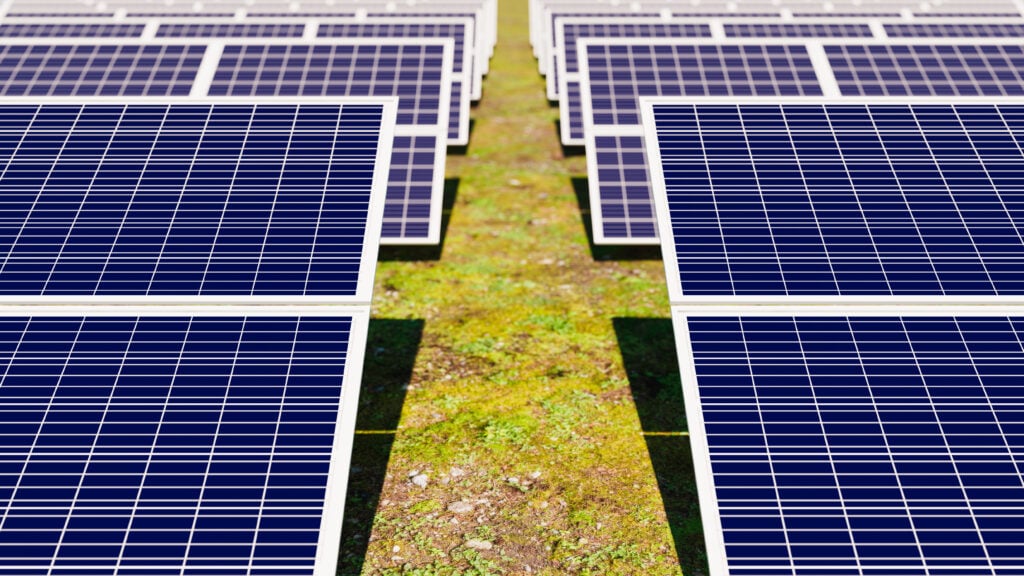
With the input limits established, the panel sizing question mostly answers itself. A single 100W panel sits comfortably within the wattage cap of virtually every 300Wh-class station and, at the right voltage, falls cleanly inside the input window. Manufacturer guidance positions a 100W panel as sufficient for units in the 200–500Wh range, and that framing holds up under scrutiny — not because the source is authoritative, but because the physics of the station’s input cap makes going much larger pointless.
On a good day with the panel pointed well and the sun cooperative, a 100W panel can recharge an empty 300Wh station and still have enough to top up phones and small devices throughout the day. Charge time in strong direct sun is often cited in the 5–7 hour range for stations in this bracket. Hold that number loosely — more on why in the next section.
A 200W panel is the practical ceiling for most 300Wh stations, and only makes sense if your unit explicitly supports that input level and the panel’s voltage is compatible. Beyond 200W, you’re buying watts the station will never accept.
What the Charge-Time Numbers Actually Assume
Every clean charge-time estimate — “5 hours,” “7 hours,” “fully charged by noon” — comes with a set of conditions that the headline number quietly omits. Before you plan around any figure, apply two adjustments.
First, derate the panel output. Real-world conditions — heat, dust, non-optimal angle, minor shading — consistently push actual output to roughly 70–80% of nameplate rating. A 200W panel in practice averages closer to 150W; a 100W panel closer to 75–80W. That same manufacturer who cites clean charge-time numbers elsewhere acknowledges this derating in their own documentation, which makes it more credible, not less. Apply it to any charge-time claim before you trust it as a plan.
Second, account for peak sun hours at your location and time of year. Peak sun hours — the hours in a day where solar irradiance is strong enough to matter — swing enormously:
- Sunny climates in summer: roughly 5–6 peak sun hours
- Northern Europe or northern US in winter: roughly 2–3 peak sun hours
A 100W panel derated to ~75–80W of real output, running for 3 peak sun hours on a winter day, delivers somewhere around 225–240Wh — potentially not enough to fully recharge a 300Wh station in a single day. The same panel in summer at 5–6 hours refills it with capacity to spare. That gap is the difference between a reliable daily recharge and a partial one.
The conditions that push toward the bad end of the range compound each other: a dusty panel angled flat on a short winter day in a cloudy climate can lose well more than half the nameplate output. The panel-on-a-car-dash scenario, or a panel left flat on a table rather than tilted toward the sun, is a significant fraction of rated output right out of the gate.
The takeaway isn’t that solar is unreliable — it’s that the optimistic number is a ceiling, not a plan. Size for the sun conditions you actually have, not the Arizona benchmark in a manufacturer’s example.
What a 300Wh Station Is Actually Built For
A 300Wh station is a small-device unit. That’s not a criticism — it’s the design target, and understanding it keeps expectations calibrated.
It handles:
- Phones, tablets, and small electronics (multiple charge cycles)
- LED lights and a small fan
- A CPAP without humidifier (drawing roughly 30–50W, so 5–9 hours of runtime)
- A laptop (drawing roughly 45–90W, so one or two full charges)
It does not handle coffee makers, microwaves, or resistive heat appliances — those draw 600–800W or more, which exceeds both the station’s inverter rating and its energy capacity in short order. A coffee maker would drain a 300Wh station in under half an hour even if the inverter could start it, which it likely cannot. Light camping — charging devices, running a lamp overnight, keeping a CPAP running — is the design brief.
One wrinkle worth flagging: the formula “runtime = capacity ÷ watts” leaves out inverter losses and startup surge. A device that fits on paper — averaging 40W, should run 7 hours — can still fail to start if its motor or compressor draws a surge spike the inverter can’t sustain. For a 300Wh station, motor loads with significant surge (even small ones) deserve a check against the inverter’s surge rating before you depend on them.
Battery Chemistry and the Cycle-Life Numbers
Most 300Wh stations come in either standard lithium-ion or LiFePO4 (lithium iron phosphate). The longevity difference is real: standard Li-ion is typically rated for roughly 500–800 cycles, LiFePO4 for roughly 3,000–6,000. A LiFePO4 unit can plausibly outlast a Li-ion unit by a factor of five or more if you’re cycling it regularly.
That said, those numbers come with a condition that almost no spec sheet states outright: “cycles” means cycles to 80% of original capacity, measured at a specific temperature. A “3,000 cycle” rating at a controlled lab temperature is not the same as 3,000 real-world charge cycles in a car trunk in summer or an unheated shed in winter. Heat accelerates degradation; deep, frequent discharges accelerate it further. No independent tester can verify thousands of cycles in a real review window — these figures come from cell datasheets, not measured results.
The honest framing: LiFePO4 meaningfully outlasts Li-ion, and the chemistry choice matters for long-term ownership. But treat the specific cycle number as directional, not as a guarantee. The conditions that determine where you land within that range — temperature, depth of discharge, charge habits — are yours to manage.
Putting It Together
For a 300Wh station, the sizing decision is straightforward once you’ve checked the right thing first. Pull up the station’s solar input spec — its voltage window and its wattage ceiling. Find a single ~100W panel whose voltage output falls inside that window. That’s the matched setup, and it will recharge the station dependably in good sun conditions without bumping into the input cap.
Don’t size up to a bigger panel looking for faster charging without first confirming the station can actually accept the extra watts and that the voltage still fits. And when you’re estimating how long a charge will take, cut the nameplate output to 70–80% and use the peak sun hours for your real location — not the manufacturer’s sunny-day example. The unit this size is built for small devices and light use; match the panel to the input, not the other way around.