
On this page
Here’s the thing about shopping for a solar generator: the question is “how much does it cost,” but the product pages won’t tell you. They’ll tell you watts, watt-hours, surge ratings, charge times, and cycle life — everything except a price. That’s not an accident. The spec flood is the sales pitch, and the actual cost is parked behind a checkout button, surrounded by add-ons the headline figure doesn’t include.
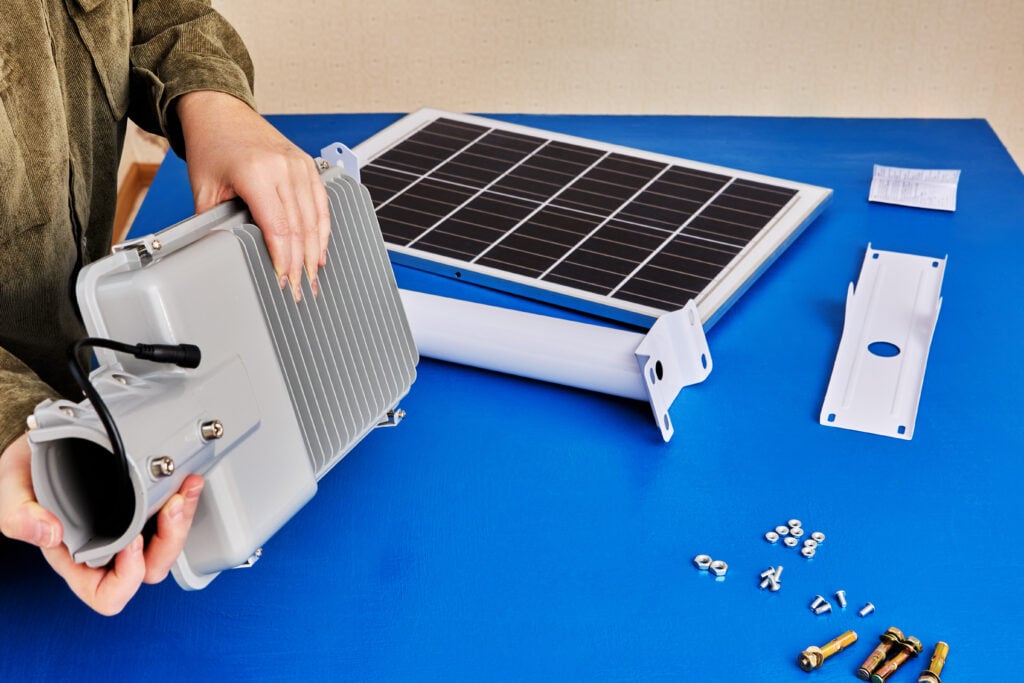
The bigger trap is what “solar generator” prices usually cover: the power station box, and not much else. Panels are frequently sold separately. Expansion batteries — the things that turn a modest unit into the “power your whole house” system on the landing page — are each a separate purchase. The advertised capacity assumes you’ve bought all of it. If you price just the base unit, you’re pricing a fraction of the system the marketing describes.
What follows is a guide to reading the specs honestly, understanding what actually drives the cost, and knowing where the numbers are real versus where they’re a seller’s best-case ceiling.
The Real Cost Driver Is Wh — Not the Watts Everyone Leads With
Before anything about dollars makes sense, you need to understand the two numbers that determine what a solar generator can actually do — because sellers lean heavily on the impressive-sounding one.
Watts (W) tell you how much you can run at once. A unit rated at 1,800W continuous can power devices that sum to 1,800W running simultaneously. Surge watts — typically one and a half to two times the continuous figure — cover the brief spike when a motor starts. That spike lasts a second or two; your sustained load has to live under the continuous rating, not the surge number.
Watt-hours (Wh) tell you how long. This is the energy tank. A 2,000Wh unit running a 200W load lasts roughly ten hours. The same 2,000Wh unit powering a 1,000W load lasts roughly two. Runtime is just the tank divided by the draw — and the tank size is what primarily scales with price.
This distinction matters because a high surge rating on a small battery is a common mismatch. A unit with a big surge number and a modest Wh capacity can start a motor — once — and then run out of steam. Specs-first shopping papers over this. The question to ask is: how many watt-hours, and how many continuous watts? Both have to fit your actual needs.
What “Solar Generator” Actually Includes — and What It Doesn’t
Seller pages list products across a wide range: small units under 1,000Wh with a few hundred watts of output, mid-range units around 2,000Wh with 1,800–2,400W continuous, and large expandable systems reaching into the 12kWh-plus range at 7,000W+ continuous. The expandable ones advertise storage that can scale to 30kWh, 60kWh, even 90kWh with stacked expansion batteries.
Here’s what the sources actually confirm about cost structure:
- Panels are frequently sold separately, even when the product category is called a “solar generator.” A bundle labeled “solar kit” or “with solar panel” costs more than the base unit — that price difference is the panel.
- Expansion batteries multiply the price. The “expandable to 90kWh” figure describes a configuration that requires purchasing multiple additional battery units, each a separate line item. The base-unit price is nowhere near the all-in cost for that system.
- Capacity and output together determine the price tier. More watt-hours and higher continuous output both push cost up, and the relationship is steep — doubling usable capacity roughly doubles or more than doubles the price.
Neither of the major sources reviewed (both manufacturer and retailer storefronts) listed prices in the page content — cost is deferred to checkout. That structure benefits the seller: you anchor on the capability specs before you see the number.
When comparing products, the most honest unit to use is cost per watt-hour of actual usable capacity. It won’t make two products identical, but it cuts through the spec noise better than comparing raw watt numbers.
The Charge-Time Numbers Are Best-Case Ceilings, Not Expectations
Fast solar charge times are a big selling point. One manufacturer quotes a full charge in around an hour and a half for smaller units, and roughly two and a half hours for a large flagship model. These figures come only from the manufacturer — no independent tester confirmed them — and they carry a condition that’s easy to miss: they assume the maximum rated panel array, operating under ideal sun.
In the real world:
- Cloud cover, low sun angle, panel temperature, and shading all reduce actual solar input below the rated maximum.
- The headline charge time assumes you’ve already purchased the full panel array — often a significant additional cost beyond the power station.
- The “0–80%” figures that appear on some specs hide the slowdown in the final stretch: lithium charging tapers in the last phase, so the final 20% takes disproportionately longer.
If you’re buying a unit that “includes” one panel and the charge time quoted assumes four, you’re not getting that charge time. Confirm exactly how many panels are included in any bundle, and treat published charge times as the best-case floor, not the typical day.
The “Power Your Whole House” Claim Deserves a Hard Look
The largest expandable configurations are marketed as capable of powering a home, citing a US average consumption figure of roughly 10,566 kWh per year — which works out to about 29 kWh per day. On paper, a maximum-configuration system with 90kWh of storage covers several days of that average. The math isn’t wrong for the maximum build.
The honest version of that claim has a few pieces the ads leave out:
- The 90kWh configuration is the most expensive possible build — a stack of expansion batteries, not the entry-level product.
- Storage and supply are different things. 90kWh tells you how long the tank lasts; it says nothing about whether your solar panels can refill it fast enough. Without enough daily solar input to replenish what you use, the system is a finite backup, not a renewable energy source.
- Heavy simultaneous loads — central air conditioning, electric heat, a well pump — push hard against output limits even when storage is plentiful.
This is a single seller describing its most capable (and most expensive) configuration in the best possible light. File it under “achievable at maximum cost” rather than “typical product behavior.”
Battery Life and the Cost Math You Can’t Actually Do Yet
The cost argument for solar over gas depends heavily on how long the battery lasts. One manufacturer claims “ten-plus years of daily use” for their LFP (lithium iron phosphate) battery chemistry. LFP genuinely is the most cycle-durable lithium chemistry available — this isn’t a fabricated claim about the chemistry. But the headline figure is missing the information that would make it meaningful for cost calculations:
- No cycle count is stated — how many full charge-discharge cycles before the claim expires.
- No end-of-life capacity threshold — ten-plus years to what remaining capacity? 80%? 60%? That difference is substantial.
- Temperature, depth of discharge, and charge rate all affect real lifespan, and none of those conditions are stated.
Without cycles-to-80%-capacity, you can’t compute cost per cycle, which is the number that actually tells you whether a solar generator beats a gas unit over time. A five-year warranty is the verifiable commitment; “ten-plus years” is a datasheet projection that no review window can confirm.
That’s not a reason to dismiss LFP. It’s a reason not to treat an unverifiable marketing claim as a financial projection when you’re running your cost-per-year math.
Solar vs. Gas: The Break-Even Isn’t What Sellers Suggest
The manufacturer argument is that solar beats gas if you have three to four peak sun hours per day at your location. This comes from the seller — there’s no independent comparison in the available sources, and the seller has an obvious interest in the comparison landing in their favor.
The honest version of the trade-off:
- Solar’s genuine advantages: no fuel to buy or store, runs silently, no exhaust. Over many years of regular use in a sunny location, fuel savings are real and accumulate.
- Gas’s genuine advantages: lower upfront cost, runs on demand regardless of weather, keeps working through a week of storm cover when panels produce nothing.
- The break-even problem: solar generators carry a substantially higher upfront price than a comparable gas unit. If you’re using it only for rare, short outages, that gap may never amortize — especially if you also need to buy panels separately. The break-even is highly sensitive to how often you’d actually run it and how much sun you realistically get.
Three to four peak sun hours per day is a reasonable general threshold for the sun-availability side of that math — but it’s only one variable, and the seller presenting it had every reason to state a favorable number.
What the Efficiency Specs Mean in Practice
Panel efficiency ratings and MPPT controller specs are real technical figures, but they can stack misleadingly. A top-of-line “up to 25%” conversion efficiency (from newer TOPCon cell technology) and a “99% MPPT efficiency” controller sound like near-perfect energy capture. In real conditions, neither figure tells you your daily harvest.
Panel efficiency describes how well a cell converts sunlight under lab conditions — not your roof angle, not an overcast sky, not a panel running hot on a summer afternoon (heat meaningfully reduces output). MPPT efficiency is the controller’s conversion step, a real and separate figure — but multiplying two “up to” ceilings doesn’t predict your actual kWh for the day. Sun hours, panel angle, temperature, and shading dominate real-world output far more than the efficiency ceiling does.
Use the efficiency numbers to compare panels to each other. Don’t use them to project what your system will produce on a given day.
A Word on the 30% Federal Tax Credit
One manufacturer mentions a 30% federal solar investment tax credit that “can save 30% on total purchase and installation.” This is a real credit that applies to qualifying solar installations. However, whether portable power stations and their panels qualify — versus permanently installed systems — is not established by the source making the claim, and the IRS rules on portable equipment are a live question. If the credit is meaningful to your cost calculation, confirm eligibility directly with a tax professional before factoring it in.
How to Actually Shop This Category
The absence of prices on seller pages isn’t an accident, and the spec flood isn’t neutral information — it’s the sales environment. Here’s how to cut through it:
- Get the all-in price. Add panels and any expansion batteries you’d actually need to the base unit. The cart total is the real cost, not the headline product price.
- Compare on cost per watt-hour. It isn’t a perfect metric, but it normalizes capacity differences and makes comparisons meaningful.
- Confirm what’s in the box. Is the panel included, or is the bundle price for the station alone? How many panels does the quoted charge time assume?
- Check both continuous watts and total watt-hours against your real loads — not peak surge, and not advertised “whole-home” claims.
- Treat lifespan and charge-time claims as unverified best cases until independent testers confirm them. The warranty period is the commitment that’s actually in writing.
The one number that cuts through all of it: what does the complete system — station, panels, and any batteries you need — cost per usable watt-hour of storage? That’s the figure that makes different products honestly comparable, and it’s the one the seller pages are structured to keep you from calculating until you’re already at checkout.