When you purchase through links on our site, we may earn an affiliate commission. Learn more.

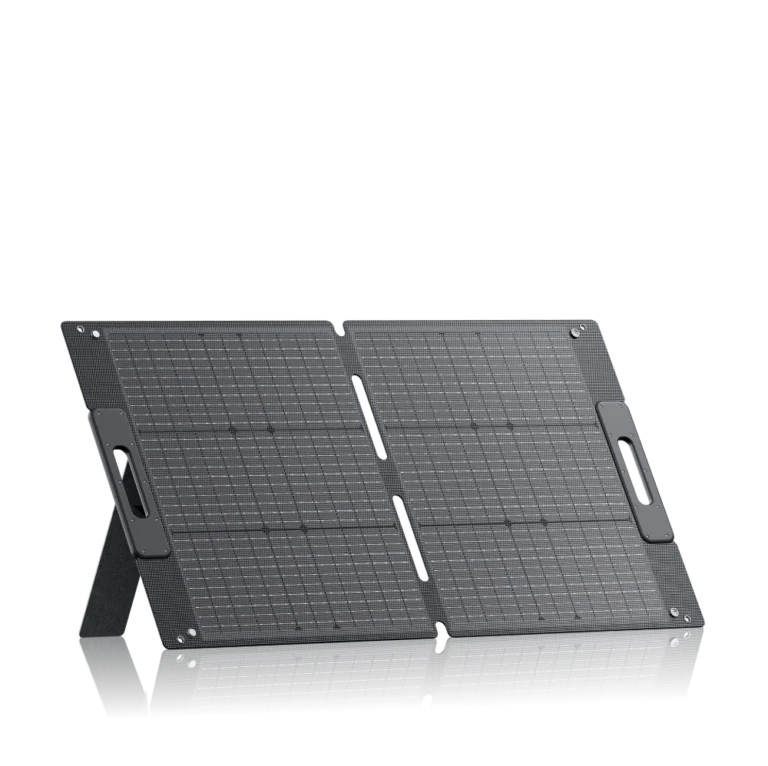
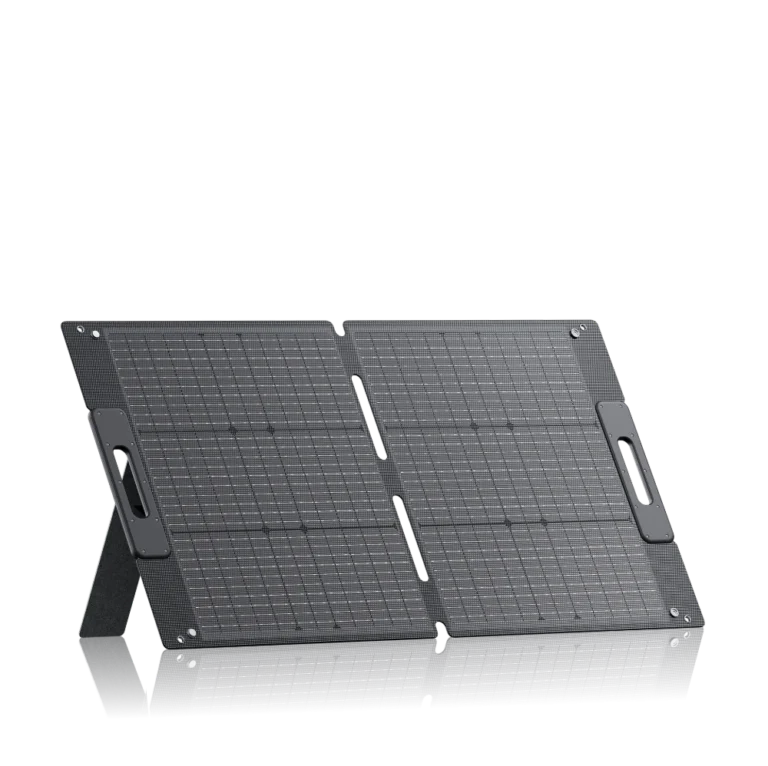
Bluetti SP100LvsSP200L

Both are Bluetti foldable monocrystalline MC4 panels from the same SP-L family, so the real question isn’t which is better — it’s which station you’re feeding and how hard you’ll run it. The SP200L is twice the panel: double the rated watts, but heavier, pricier, and a single-panel deployment instead of stacking two. There’s one more thing to know before you spend, and it shapes every pick below: these two panels are not equally proven. The SP200L has a deep owner-evidence base and lands at a Buy If verdict — flaws and all, you know what you’re getting. The SP100L sits at Watching: one independent bench test looks competitive, but durability, weatherproofing, the kickstands, and series/parallel pairing are all unverified. That asymmetry follows the SP100L into every segment as a certainty discount.

Check price
Prices and availability change frequently
Check price
Prices and availability change frequently
Spec Bluetti SP100L Bluetti SP200L
Rated watts 100W 200W
Cell type / efficiency Monocrystalline, 23.4% Monocrystalline, 23.4%
Connector MC4 MC4
Voc / Isc 24.62V / 5.13A 24.62V / 10.24A
Weight 10.9 lbs 17.2 lbs
Form factor Bifold, built-in adjustable kickstands 4-fold, integrated 1.5m MC4 cable, adjustable kickstands
Weatherproofing IP67 (splash-resistant, not waterproof) IP67 (water-resistant, not waterproof)
Warranty 1 year 1 year
Price $199 $349
Price per watt $1.99 $1.75
Real-world output ~56.6 Wh/hr (one independent test, mid-pack, well below Bluetti’s 90W ideal-conditions peak) ~130W in good clear sun (160–186W when perfectly aimed; collapses toward ~10W under light cloud)

Small-station top-up

  • You own a small Bluetti station — an EB3A, AC2A, AC50B, AC60, or AC70 — and you want a foldable panel to recharge it at a campsite, on a boat, or during the occasional outage. You carry it from the car to the site and stow it again; you’re not trying to run a household.
  • Carry weight: 10.9 lbs vs the SP200L’s 17.2 — a real difference for a deploy-and-stow panel you reposition through the day.
  • Entry price: $199 vs $349. For a small station you’d be paying $150 for headroom you can’t use.
  • Output is sufficient for the job: Bluetti’s own charge-time claims have a single SP100L topping an EB3A (268Wh) in ~3.2 hrs, an AC2A (204Wh) in ~2.5 hrs, an AC50B (448Wh) in ~5 hrs under ideal sun. Even discounting to the one independently measured ~56.6 Wh/hr, a small station tops up over a sunny day.
  • Plug-and-play MC4 into Bluetti’s small lineup, with built-in kickstands for sun-angle.
  • Certainty note (important): This pick carries lower confidence than usual. The SP100L’s entire independent record is one bench test; its IP67 rating, ETFE durability, and kickstand longevity are unverified, which is exactly why its review verdict is Watching. The recommendation holds because the job here is small and the one data point is competitive — but if you want a proven track record before you spend, the SP200L is the known quantity, at a weight and price penalty.
  • Why not the SP200L here: It’s the heavier, pricier panel buying watts a small station can’t absorb. It wins the moment the station gets bigger.

One-panel 200W

  • You own a mid-size Bluetti station — AC180, AC200L, AC200P, AC300 — and you want meaningful recharge from a single panel you set up once, not two panels and two cables to manage.
  • The value math that catches people off guard: to reach 200W you can buy one SP200L at $349 or two SP100Ls at $398. The bigger panel is $49 cheaper for the same nameplate, and it’s one panel instead of two — one cable, one thing to aim, one thing to fold.
  • Better price per rated watt: $1.75/W vs $1.99/W.
  • A documented, trustworthy real-world figure: plan for ~130W in good clear sun, with a deep owner-evidence base behind that number — not a single test. Owners report it keeping AC180/AC200-class stations topped up through camping trips and multi-day outages.
  • Same plug-and-play MC4 path, with an unusually broad confirmed compatibility list (30+ Bluetti models).
  • Watch-outs to buy around (none disqualifying for this intermittent use): The carry handle is a known weak point — self-tapping screws into thin plastic that can fail on the first lift. Check it before you trust it with 17.2 lbs; Bluetti ships replacement handles readily. Expect ~130W, not 200W. Under light cloud it can fall toward ~10W. This is physics for the whole foldable-200W class, not a defect — but plan around the lower number. Adapter check: the SP200L is MC4-native; stations with a DC7909 input (e.g. AC180, EB series) need an MC4-to-DC7909 adapter that isn’t in the box. Buy it alongside the panel.
  • Why not two SP100Ls instead: They cost more for the same 200W, double your deployment, and stack the SP100L’s unproven-durability question — you’d be doubling down on the panel we know least about, for a higher price.

Scaling an array or running solar hard every day

  • You want 400–600W of input, or you’re an off-grid / van-life buyer who runs solar daily and continuously, not in weekend bursts.
  • If your scaling is intermittent (a bigger array you deploy on trips, not a daily driver): lean SP200L. Its sections are internally parallel-wired, so partial shade on one section drops output proportionally rather than crashing the panel — a real advantage in dappled sites — and two SP200Ls in parallel push a 500W-input station like the AC180 near its ceiling with just two panels. Fewer panels, fewer connections.
  • If you’ll run solar every single day (full-time off-grid, boondocking, van life): this is where the SP200L’s review vetoes it. Heavy continuous users report output decaying ~50% within months — from ~170W down to ~120W over ten months in one account, and under 75W within four months of daily van life in another. The hardware that serves intermittent use breaks down under continuous duty. The review is explicit: for the full-time off-grid buyer, this isn’t the panel.
  • And the SP100L can’t rescue that scenario either — not because it’s known to fail, but because it’s unknown. It sits at Watching precisely because there are no durability reports, no weather-exposure data, and no long-term owner accounts of its series/parallel pairing holding up. Choosing it for daily heavy duty means betting on specs no one has stress-tested.
  • The straight answer for daily heavy off-grid: if continuous durability is your top priority, neither foldable panel here is the confident choice — the SP200L is actively vetoed for it, and the SP100L is simply unproven. A sealed/rigid or roof-mountable panel built for permanent exposure is the category to look at, not either of these deploy-and-stow folders.
  • Wiring note: Both panels share the same 24.62V Voc, so series-voltage planning per panel is identical; the difference is current — the SP200L pushes ~9.75A versus the SP100L’s ~5.13A. Documented stacking facts: the SP200L manual says use only one with an EB3A or EB55 (two in series, 49.24V, exceeds those small stations’ input limit); two SP200Ls in parallel sit near the AC180’s 500W ceiling. The SP100L is documented as series/parallel compatible with Bluetti’s PV100L and PV100D only. Bluetti warns against mixing panel models — don’t combine SP-series with PV-series, and don’t mix brands. Beyond these stated facts, confirm your specific station’s solar-input voltage window before stringing panels in series.
The bottom line

The SP100L wins small-station top-up on carry weight and entry price — 10.9 lbs and $199 buy sufficient output for a small input window without paying for headroom you can’t use. The SP200L wins one-panel 200W on rated watts, better price per watt, and single-panel deployment — one SP200L at $349 is $49 cheaper than two SP100Ls for the same nameplate, and it’s one cable instead of two, backed by a deep owner-evidence base. For scaling an array or running solar hard every day, there’s no confident pick: the SP200L scales well for intermittent arrays but is actively vetoed for daily continuous off-grid use by output decay under heavy duty, and the SP100L is simply unproven — no durability reports, no daily-duty track record. If continuous durability is your top priority, neither foldable panel here is the confident choice; a sealed/rigid or roof-mountable panel built for permanent exposure is the category to look at.