
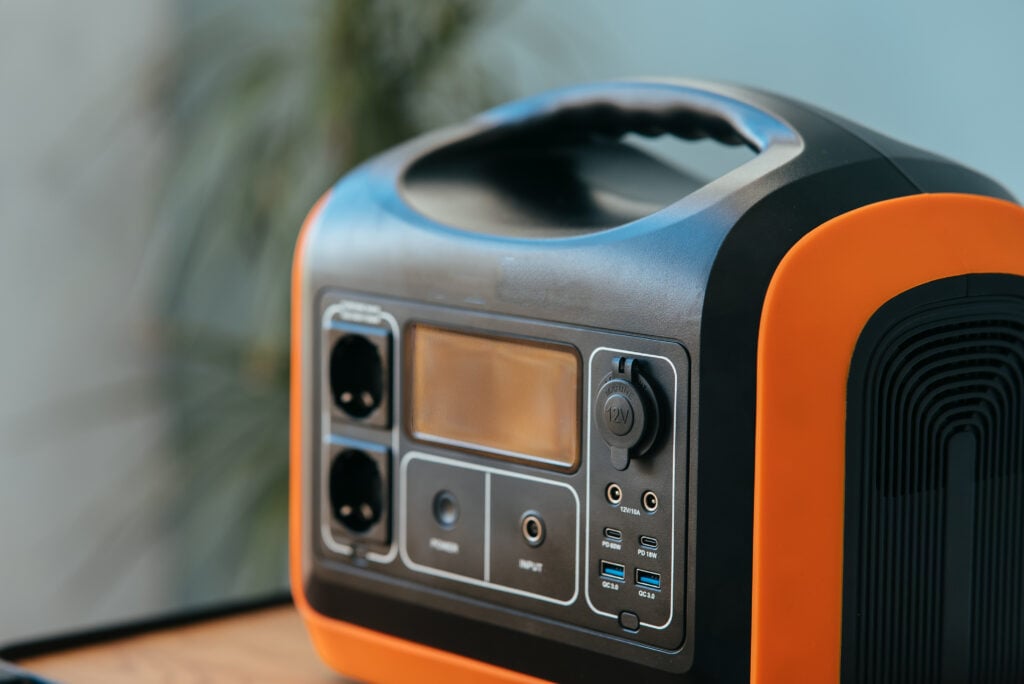

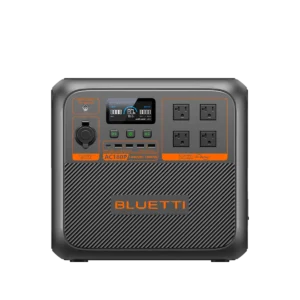
The buyer here is making one purchase that has to cover a vehicle camping trip on Saturday and a fridge-and-router outage on Tuesday — possibly for ten years. That double brief narrows the field faster than any single spec: you need enough capacity to run overnight, enough solar intake to refill from panels in reasonable sun, and a unit light enough to move without a second person. In the 2 kWh class, three stations land within 6 Wh of each other and $50 of each other. The spec sheet cannot break that tie.
The C2000 Gen 2 wins on the margins that compound across a decade of single-unit ownership. Its 800 W solar ceiling is double what either competitor accepts, which means a reasonable panel array can refill it in roughly three hours of good sun rather than four or more. It is the only station in this tier with an expansion path — a second battery brings it to 4,096 Wh if the use case ever grows. And its idle draw, bench-confirmed at 9 W with AC outlets off and around 18 W with them live, is the lowest in the class: a unit left on standby for a three-day camping weekend doesn’t consume a meaningful fraction of its own tank.
The recharge story is the practical headline. A full AC charge takes about 80–90 minutes at 1,800 W, and pairing the AC input with a solar panel brings that to 58 minutes at the combined 2,600 W rate. For a buyer who alternates between grid charging and generator topping, that speed is genuinely useful rather than a marketing figure. The 2,400 W inverter has been run against an air fryer drawing ~1,420 W sustained, a kettle drawing over 2,100 W, and simultaneous TV, gaming console, and fridge loads without complaint. Real fridge runtime lands in the 14–22 hour range across multiple tests — plan multi-day math on that number, not the 32-hour figure on the box, which reflects lab conditions without door cycling.
Two conditions to carry. First, enable the Output Port Memory Switch if you’re using this as an unattended fridge backup — without it, a power interruption can leave outputs off until you notice. Second, on a shared 15A household circuit, limit AC input to around 1,500 W or below to stay clear of the breaker. There is also a thin but documented USB-C port failure pattern across two reports; test both ports in the return window.
Skip it if: you expect to add solar panels larger than a single 500 W array, or if there is any chance your capacity needs will grow — the C2000 Gen 2’s expansion port and solar headroom are the right call for a ten-year horizon.
The DELTA 3 Max is the stronger machine on two specific axes: it bench-measured a 68-minute full charge (the fastest in this tier), and a home server ran behind it through two real grid events over a year on its sub-10 ms UPS — the most credible switchover evidence of any unit in this segment. If those two things are your actual priorities, the DELTA 3 Max at $749 is the pick, not the runner-up.
What costs it the top spot over a decade of buy-once ownership: 500 W solar means four or more hours to refill in ideal sun, and there is no expansion port. Buyers who discovered those limits after purchase had no good options — neither limitation surfaces clearly in the marketing. If you are planning to add panels or ever want more capacity without a second purchase, the DELTA 3 Max has no path there and the C2000 Gen 2 does.
The lightest measured unit in this class at 38.9 lbs earns a mention for buyers whose primary concern is carry weight and who are willing to plan around its limits. The 2000 v2 kept a camper fridge running for five days on a single charge under real conditions. But its 400 W solar ceiling — with proprietary connectors that limit panel compatibility — is the sharpest constraint the spec sheet downplays, and its UPS auto-switchover has a documented intermittent failure pattern where a fridge went dark and stayed dark until someone manually reset the unit. For a buyer who needs the unattended-backup half of this segment’s brief, that failure mode is disqualifying. It also will not charge below 32°F. The right buyer for the 2000 v2 is someone for whom carry weight beats everything else and who does not rely on it for unattended outage backup.
The buyer here wants their first power station: outage essentials, a weekend trip, peace of mind that the fridge stays cold through a short blackout. The hard ceiling is $500. Below that price, nothing dominates — one unit gives the most energy per dollar, one charges fastest and has the best UPS, one is lightest with extraordinary solar intake. The tie breaks on usable energy per dollar, the number a first-timer actually lives with every day.
The AC180P delivers roughly 1,150 Wh at the wall under typical loads — the most usable energy under $500, and a gap that shows up immediately in practice. The next-largest survivor of this segment’s budget ceiling delivers about 940 Wh for $449. For a buyer powering a full-size fridge and a router through an outage, that difference is two to four extra hours of runtime.
Appliance anxiety is the common first-timer concern, and the AC180P retires it better than any other unit in this tier. Its 1,800 W inverter has been run against 1,500 W space heaters, 2,000 W microwaves, pressure-washer combos, and a mobile detailing business operating off it daily. The Power Lifting surge mode reaches 2,700 W, but that figure applies only to resistive loads — it is not a true inductive surge for motor-start loads; keep that in mind before plugging in a compressor. Outage essentials at this buyer’s loads are well-documented: a full-size fridge for 10–12 hours, a CPAP for 15-plus hours, a 50 W mini-fridge for roughly 24 hours. Recharge is fast for the class — 0–80% in 45 minutes on the US-market Turbo setting, full in about an hour.
Two limits worth knowing before you buy. The expansion path marketed by Bluetti for this unit does not exist — Bluetti’s own documentation confirms it — but that’s irrelevant for a buyer with a one-unit budget. More consequential: the UPS mode can lock out AC output on messy grid transitions and require a manual reset to recover. For attended use — someone home during an outage — this is a minor annoyance. If your real need is an unattended critical-load UPS for medical equipment or a server, this is the wrong category entirely, not just the wrong unit.
One thing to know about the idle draw: at very light loads under 50 W, the AC outlets carry a 15 W baseline overhead. If you’re just keeping a phone topped up, plug into the DC side instead — the idle tax disappears and you keep more of the battery.
Skip it if: raw energy is your primary concern — the AC180P’s 200-plus extra watt-hours at the wall justify the extra $50 for most first-timers running a fridge.
The DELTA 3 Classic is a genuinely different machine that wins on different ground: it bench-measured 940 Wh delivered at the wall — an exceptional 91.7% of its rated capacity, the highest efficiency figure on this page — and it charged fully in about 55 minutes, a speed that used to be exclusive to stations costing $600 or more. Its 10 ms UPS with a 13 W idle has kept a Starlink running for 12-plus hours in testing. At 27.3 lbs it is also the lightest unit in this segment.
What it trades for all of that: roughly 210 fewer watt-hours than the pick at only $50 less, no 12V car port, and no expansion path. There is also a documented BMS failure mode under high-cycle daily-outage duty — fine for the occasional-outage buyer this segment assumes, the wrong call for anyone deep-cycling it daily through repeated outages. Enable the ‘never’ inactivity setting if you want the UPS to stay live; the default 2-hour shutoff will catch you otherwise.
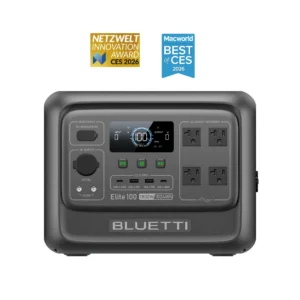
At $399 it is the cheapest unit in this segment, and at 25 lbs it is the lightest. Its 1,000 W solar input ceiling is higher than anything else on this page at any price under $800 — genuinely remarkable hardware for a solar-first mobile user who will configure it correctly.
The configuration requirement is the catch. Full 1,000 W solar intake requires a 48–60 V panel array and enabling a high-current PV mode that ships disabled — a first-timer is unlikely to set either up correctly out of the box. At 24 V arrays, the ceiling drops to 460 W. More seriously, the default ECO mode has cut AC output during a sump pump’s idle cycle and caused a documented basement flood, and the unit will not start reactive motor loads that competitors in this tier handle. There is also a documented early-failure cluster — units dead on arrival or failing within the first six months, with warranty service honored but complicated by lithium return requirements. For an experienced buyer who wants a solar-first mobile station and will configure it before first use, the Elite 100 V2 is a compelling $399. For a first-timer who wants to plug it in and trust it, it is not the right call.
This buyer carries the unit in one hand. It lives in a closet and gets grabbed when the lights go out, or it rides in the back seat to a campsite for a long weekend. Loads are phones, fans, lights, a 12V cooler, a CPAP — light, often DC. For this brief, the spec sheet suggests an obvious winner.
It isn’t. The EcoFlow RIVER 2 Pro has the most capacity of any one-hand-carry station, the lowest price, and the best nameplate value figure in the class. Multiple owners bought it specifically for grab-and-go outage readiness — and found it at 0% when the outage arrived. Measured loss of around 40% of battery capacity per 24 hours with the inverter on and nothing connected is a design-level problem for a unit you store charged and grab in an emergency. EcoFlow’s own support guidance is to power the unit fully off between uses. A station that must be powered off to hold a charge is not a grab-and-go station. The win passes to the unit whose track record confirms it will be charged when you need it.
At 16.1 lbs with a collapsible handle, the 600 Plus hits the carry sweet spot for 2–3 day trips — one tested trip ended at 25% after phones, fans, and an air pump; another ended at 80% after two nights. The recharge cable plugs straight into the wall with no external brick to lose, and a full charge takes about 90 minutes. LFP chemistry tolerates sitting at full charge across weeks of closet storage without meaningful degradation.
CPAP use is the most thoroughly validated niche: two-plus nights per charge on the 12V DC adapter with the inverter bypassed entirely. There is one friction point worth naming — the fan ramped audibly around 5.5 hours in during one overnight test and woke a light sleeper. If you share a tent with someone sensitive to noise, that’s worth knowing before you commit.
There are two conditions to carry before buying. First: keep outputs switched off when the unit is in storage. A measured 23% drain over 12 hours with outputs enabled and nothing drawing is a real figure — single-source, mechanism corroborated — and avoiding it is a simple habit rather than the design-level problem on the vetoed unit, but it requires the habit. Second: buy direct from Jackery rather than through third-party marketplaces. An early-failure minority cluster exists, returns on lithium through Amazon are a documented friction point, and Jackery’s own channel carries the automatic 5-year warranty.
The 800 W output ceiling is the hard boundary of this entire segment. No kettle, no Keurig, no hair dryer — and it’s the expectation mismatch the 600 Plus generates most consistently. If you find yourself wanting to plug in a small appliance on a regular basis, you’ve grown out of this category and should look at the segment above.
Skip it if: you need more than two to three nights of CPAP or the flexibility to run a small AC appliance occasionally — the 600 Plus’s extra capacity and 800 W ceiling give it meaningfully more range.
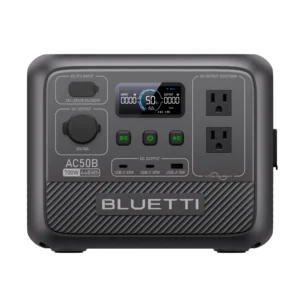
The AC50B is a genuinely different alternative, not a close second. It charges fully in 65–70 minutes with the power supply built into the unit — fastest in the carry class, and the Review’s headline finding. CPAP validation is thorough: multiple nights per charge on DC with the humidifier off, with one owner logging only 8% battery use over a 7.5-hour night. Its ~90% delivery at the AC outlets makes the 448 Wh nameplate an honest number.
Against the pick: 184 Wh less energy at nearly identical weight, and a 700 W output ceiling that a 700 W microwave tested in Power Lifting mode still couldn’t clear. The AC output also will not auto-resume after the unit wakes from solar with zero load — if you’re planning any unattended charging setup, plan around that. One quirk in quiet rooms: the pass-through micro-cycling produces a faint fan pulse that some users notice.
This is a different category of problem. The buyer here isn’t carrying anything — they’re rolling a station into place and running a house through a multi-day outage: fridge, freezer, lights, communications, and loads that run on 240V. Weight nearly drops out of the equation. What matters is how much power the station can deliver, what voltages it covers, and whether the recharge architecture supports days of continuous operation.
On raw power delivery, one unit dominates: 6,000 W continuous from a single box, with true simultaneous 120V and 240V output. That combination — confirmed against dryers, well pumps, MIG welders, and whole-house-minus-HVAC loads — is what this segment is organized around.
Six thousand watts continuous from a single unit, running 120V and 240V loads at the same time — that is the fact that settles this segment. The alternative cannot do it: its firmware forces a choice between modes, so you can run either 120V or 240V, not both simultaneously. For a buyer with a well pump on 240V and a fridge on 120V, that is the gap between a functional backup and an incomplete one. The F3800 at $1,799 also costs $300 less than the runner-up while delivering 2,000 more watts.
Independent testing measured roughly 3,450 Wh usable on a full discharge cycle. At 50–60 dB even under heavy kitchen loads, it is quiet for its class. Expandable to 26,880 Wh as a single unit — treat that as a floor; the actual ceiling is higher.
There is one architectural condition that defines the purchase decision: when the F3800 is charging via its 120V AC input, the 240V output and three of its six 120V outlets go offline. Charging the unit while simultaneously running a 240V load — a well pump, a dryer — is not possible on AC input alone. The documented workaround is DC input through the solar port (a 48V battery or a chargeverter), or buying the F3800 Plus which resolves the limitation. The practical consequence: either complete your charging before the outage load begins, or plan the workaround before the storm, not during it.
Solar reality also needs a plain statement: the 2,400 W rated input requires Anker’s own panels to approach. A standard third-party 400 W panel measured 280 W maximum in clear sun; expect real solar intake near half the rated figure with a typical panel setup. Plan solar replenishment in hours, not the sub-two-hour marketing figure.
Idle draw runs 50–57 W, amounting to roughly 0.8–1.2 kWh per day in standby — a real cost if you’re keeping it charged ahead of weather events. The F3800 will not charge below 32°F and throttles below 50°F; winter prep means topping up before the temperature drops.
Skip it if: you need simultaneous 120V and 240V from a single unit, or you need to leave it running critical loads unattended without anyone home to reset a firmware fault — those are the F3800’s two decisive advantages.
The DELTA Pro 3 carries the largest base battery in the segment at 4,096 Wh, a 48 kWh system expansion ceiling, UL9540 safety certification, and a 10 ms UPS the F3800 cannot match. For a buyer whose priorities are maximum stored energy, future expandability, and certified safety listing, it is the more capable platform.
Three things cost it the top spot. It cannot run 120V and 240V simultaneously — firmware forces one mode at a time. Its pass-through charging throttles output to roughly 1,800 W when grid-connected, meaning a compressor surge can trip it offline (a problem for both UPS and RV-park use, as the review explicitly notes). And a long-term tester encountered three firmware-fault resets in five weeks with no shutdown notification — an explicit ‘not recommended for unattended critical-load backup’ finding. A present owner can reset it; an absent one cannot.
The 120V bench recharge time is also worth knowing: measured at 2 hours 35 minutes to 2 hours 54 minutes, versus the 50-minute figure in the marketing materials; on 240V input that improves to roughly 75 minutes. Real-world outage testing put it at 20–22 hours on a fridge, furnace, and tankless heater combination, and 28 hours on a fridge alone — strong numbers at lower draw.
The HomePower 3600 Plus exits the 240V competition entirely — it is a 120V-only unit. For the buyer who needs 240V, it is not a candidate. But for the household running outage essentials on 120V, it earns a separate mention on two grounds: it is the lightest and most movable unit in this capacity class by 20–55 lbs (wheels confirmed on concrete, gravel, and snow), and it charges in temperatures as low as -4°F — a capability neither the F3800 (no charging below 32°F) nor the DELTA Pro 3 offers. A true 30A TT-30 outlet and a bench-confirmed sustained output near 3,200 W under stacked kitchen loads make it a capable 120V backup. One trap to know: in bypass mode while wall-connected, outlets are capped near 1,440 W — run high-draw appliances off the battery, not pass-through.