

The 1 kWh class is genuinely crowded, and the honest answer is that no single spec runs away with it. A handful of units land within about $20 of each other at nearly identical capacity — which means the right pick is the one that wins the balance of things a social tailgate actually leans on: enough outlets to run everything at once, a weight you want to carry from the parking lot, quiet operation during the game, and a fast enough recharge to be ready for next Saturday.
The DELTA 3 takes the tiebreak on the axis a social tailgate rewards hardest: six AC outlets, more than anything else in its class. The TV, the speaker, a blender, and a couple of charging bricks all plug in directly — no power strip, no juggling. Owners report powering kettles, projectors, and multiple crock pots at tailgates off this unit without issue. It runs nearly silent below 600 W — a 32–33 dB whisper at a full charge — which matters when the game is on and nobody wants fan noise cutting through the commentary. At 27.6 lb it is a comfortable two-hand carry, and the 56-minute wall recharge means it is ready for next weekend before the postgame coverage ends.
Two limits to know before the game. The inverter idles at about 17.6 W, so turn it off between sessions or it will quietly drain over a couple of days. EcoFlow warranty support requires shipping the unit back and has no US phone line — slow if something goes wrong, though it matters mainly for a unit that doubles as backup power rather than a dedicated tailgate box.
Usable energy at light social loads — TV, speaker, intermittent blender — runs around ~900 Wh, roughly 90% of nameplate, comfortably a full game of entertainment plus charging for a group.
Skip it if: You want the absolute quietest and lightest setup with no expansion plans — the Anker SOLIX C1000 Gen 2 wins that call.

If the priority is the quietest and lightest possible setup, the C1000 Gen 2 is a genuinely nicer box to live with: independent testing measured it at roughly 20 dB — close to inaudible outdoors — and it is the lightest unit in the class at 24.9 lb, with a 2,000 W rated output and a ~47-minute recharge. It loses the segment only because it is not expandable and gives up the DELTA 3’s outlet count. The call is simple: quietest and lightest grab with no expansion plans → C1000 Gen 2. Most things plugged in at once with room to grow → DELTA 3.
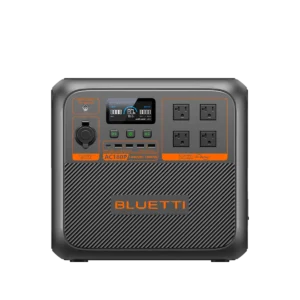
For a longer or bigger social tailgate, the AC180P brings 1,440 Wh — 40% more capacity than the 1 kWh field — and a wireless charging pad that earns its place on a table full of phones. Two things keep it off the top spot: its fan starts early (around 200 W, sooner than cheaper units) so it is a touch noisier at a quiet setup, and the marketed battery expansion does not actually exist — Bluetti’s own manual confirms it is Power Bank Mode only. The trade is straightforward: more runtime and a phone pad for a bigger crew → AC180P. Quieter, more outlets, lighter → DELTA 3.
When the cooking is the point, one number swamps everything else: sustained output. An electric griddle pulls around 1,500 W on its own. A griddle plus a kettle, an air fryer, or a coffee maker pushes the simultaneous draw past 2,400 W toward 3,000 W — and a unit that clips at 2,400 W under that double load is not doing the job. Capacity and value matter, but they are secondary until the inverter can actually hold both appliances running at once.
The DELTA 3 Max Plus delivers a confirmed true 3,000 W continuous — enough to run a 1,500 W electric griddle and a 1,500 W kettle or air fryer simultaneously, which is exactly the two-appliance load that defines a serious cook-heavy tailgate. The 6,000 W surge absorbs the startup spike from a blender or kettle without tripping. It is the quietest unit at this output level, measuring around 25 dB — a meaningful advantage when the setup is otherwise enjoying the day. At 48.7 lb it is still a manageable two-hand carry from the truck, and it expands to 10 kWh if the party grows and you need more runway.
The one caveat worth naming: its UPS switchover is not seamless and can reboot sensitive electronics during a power transition. At a tailgate running on battery from the moment you arrive, there is no grid to switch from — that limitation never gets the chance to matter.
At heavy cooking loads — griddle plus a second appliance — usable energy runs around ~1,750–1,850 Wh. That is a solid few hours of intermittent griddle cooking alongside a TV; add the expansion battery if you are cooking for a large crowd across an entire afternoon.
Skip it if: You only ever run one high-wattage appliance at a time and want to save $300 — the Anker SOLIX C2000 Gen 2 handles that job and weighs less.
The value cook champion. Independent testing confirmed it ran a kettle pulling over 2,100 W, an air fryer around 1,420 W, and a 1,600 W microwave without tripping — so it handles a big single appliance plus extras with ease, at $300 less than the DELTA 3 Max Plus and the lightest weight in the class at 41.7 lb. The only reason it is not the pick: it cannot run two full 1,500 W appliances at the same time, because 1,500 plus 1,500 exceeds its 2,400 W ceiling. Its roughly 88-minute recharge gets it ready for the next game fast. Run a griddle and a kettle together → DELTA 3 Max Plus. Run one big appliance at a time and save $300 → C2000 Gen 2.
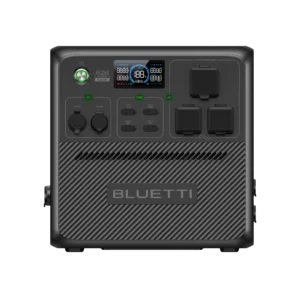
The only IP65 weather-sealed unit in this guide — dust-tight, resistant to water jets, and designed to be hosed down. Testing ran a heater and a griddle near 2,300 W under simulated heavy rainfall without failure. For the grill master who cooks in the open and wants to clean the unit with a hose after a messy cook, nothing else qualifies. The costs are real: it is the smallest battery in this tier at 1,843 Wh, carries only two standard AC outlets, is the heaviest unit for its capacity at 72 lb, and is the worst value in the segment. Its Power Lifting mode is resistive-only — fine for a griddle or kettle, but it will not start a motor. Cook in the rain and hose it clean → AC240P. Everything else → DELTA 3 Max Plus or the C2000 Gen 2.
The big-party segment genuinely forks, and forcing a single winner would paper over the real decision. The line is whether your cooking is electric or propane. Run an electric griddle alongside a big TV, a PA system, warming trays, and a crowd of phones and you need raw output above 2,600 W and a wall of outlets — one unit owns that combination. But if your cooking is on propane and the electric load is everything else, the decisive axes shift to total capacity, value, and how easily it rolls across a parking lot — and a different, much cheaper unit wins by a wide margin. Know which side of that line you are on.
For the no-compromise electric-cooking party, the DELTA Pro 3 brings the most capacity (4,096 Wh), the most output (4,000 W), and the most versatile port array on this page: seven AC outlets including four standard 120V plugs, so a whole crew plugs in directly. Independent testing measured usable energy at around ~3,810 Wh on the 120V inverter — a genuine all-day runway for a large setup. It rolls on wheels with a telescoping handle, which handles a parking lot easily; it becomes a two-person job only at curbs and stairs. Noise runs about 30 dB at the moderate loads a party actually draws, climbing to 55–56 dB only if you push it near its ceiling.
The DELTA Pro 3 carries two well-documented limitations that scare off buyers in other contexts — and both evaporate at a tailgate. Its output drops to around 1,800 W when grid-connected and charging simultaneously, but at a tailgate you are on battery from the moment you park. The firmware and app flakiness that makes it a risky choice for unattended critical backup does not matter when you are standing right next to it all afternoon. What is left is a quiet, 4,000 W, seven-outlet rolling power plant.
Skip it if: Your cooking is on propane and you want maximum energy per dollar — the Bluetti Elite 400 delivers nearly as much capacity for $800 less.
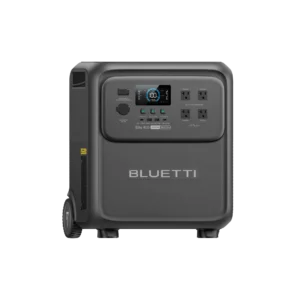
If your cooking is on propane, the Elite 400 is the smarter spend — it is not close. It carries nearly as much capacity (3,840 Wh), the best price-per-watt-hour in the entire guide at $0.338/Wh, and an idle draw of around 12 W so it will not bleed out across a long afternoon. It rolls on wheels with a telescoping handle and comes in at 85.98 lb, a noticeably easier roll than the DELTA Pro 3. The hard limit is its 2,600 W ceiling: testing confirmed that adding a kettle on top of a 2,000 W base load trips it instantly. It cannot do heavy electric cooking alongside the rest of the party — which is exactly the line between it and the winner. Electric griddle plus everything → DELTA Pro 3’s 4,000 W. Propane cooking, maximum capacity, $800 less → Elite 400.
The lightest 3 kWh unit here at 59.52 lb and one of the quietest in the segment at around 42 dB — the easiest big battery to lift in and out of a truck for a party that values a quiet, movable box. There is a catch in the outlet layout worth understanding before you load it: the full 3,600 W lives only on the single TT-30 outlet; the four standard 20A outlets are capped at 2,400 W combined, and owners have tripped the breaker running two 1,500 W appliances on the same outlet pair. Plan your heavy load onto the 30A port. Easiest to move and quietest → HomePower 3000. Most outlets and most headroom across all plugs → DELTA Pro 3.
The budget-light units cluster so tightly on specs that the numbers alone cannot separate them. What actually breaks the tie is how each unit behaves in the real conditions of a tailgate — and one unit that looks like a ‘skip’ everywhere else turns out to be the right answer here specifically because the flaw that disqualifies it for other uses simply does not exist under tailgate conditions.
Four AC outlets in a body under 20 pounds is unusual at this size — most units this light give you one or two. The TV, the speaker, and a charging brick all plug in at once, the 800 W inverter handles a blender burst alongside device charging, and the 70-minute wall recharge has it ready for next weekend before you have finished the postgame drive home.
The RIVER 2 Pro carries a reputation as a ‘skip’ in general-purpose guides, and the reason is real: with the inverter left on, it loses roughly 40% of its charge over a day sitting idle. For storage or emergency backup, that is a genuine problem. For a tailgater who charges the night before, runs the battery down at the game, and recharges at home — which is exactly the pattern — that drain never happens. Its measured usable energy on AC runs around ~640 Wh, the most in the budget-light set. The one honest caveat that does survive tailgate conditions: its fan is erratic and can reach about 62 dB under sustained load. Outdoors, running light entertainment loads, it rarely matters — but it is worth knowing if you run it hard.
Skip it if: The absolute lightest possible carry is the only thing that matters — the Jackery Explorer 600 Plus at 16.1 lb wins that call.
The lightest genuinely useful unit in the segment at 16.1 lb — a true one-hand carry for the minimalist who wants the smallest, easiest thing to grab. It handles phones, a fan, a small TV, and a fridge fine under 800 W. It costs $90 more than the RIVER 2 Pro with fewer outlets, less usable energy, and a minority early-failure cluster flagged in owner reports. It also carries the same standby drain behavior when left idle. Absolute lightest grab → Explorer 600 Plus. More outlets, cheaper, more usable energy → RIVER 2 Pro.
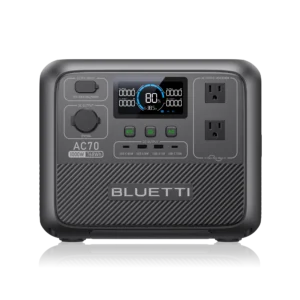
The slightly-more-muscle budget pick: a 1,000 W ceiling clears a few loads the 800 W units cannot, and a compatible expansion battery can extend the day. Before you buy it, two things to know. Real usable energy on AC runs only about 450–500 Wh — inverter and idle overhead eat more than the competing units — so it carries meaningfully less runway despite the same nameplate. There is also a documented first-year hardware-failure cluster involving the DC port, which Bluetti acknowledges; the five-year warranty does real work here, so register it and test it on arrival. Want 1,000 W output and room to add a battery → AC70. Want more usable energy, more outlets, and a cleaner reliability record → RIVER 2 Pro.